A tree trimmer died doing this work: why tree safety matters


On November 18, 2011, Richard Allen “Rick” Risinger was feeding branches into a wood chipper in Alton, Illinois. A piece of his jacket caught on a branch going into the machine. The chipper pulled him in headfirst. He was 54 years old. He was a professional with years of experience.
Tree trimming kills people every year. The Bureau of Labor Statistics consistently ranks it among the most dangerous occupations in the country. Between 2009 and 2015, over 580 workers died in tree care operations. The Tree Care Industry Association (TCIA) tracked 156 fatalities in 2021 alone. Falls, electrocution, struck-by injuries, and equipment accidents account for the vast majority of deaths.
I’m writing about this because every spring and fall, I see homeowners doing tree work that makes my stomach turn. Standing on the top rung of an extension ladder with a running chainsaw. Free-climbing a 40-foot ash with no ropes. Feeding brush into a rented chipper in shorts and sandals. These are the situations where people get hurt or killed.
Tree work is not a weekend project
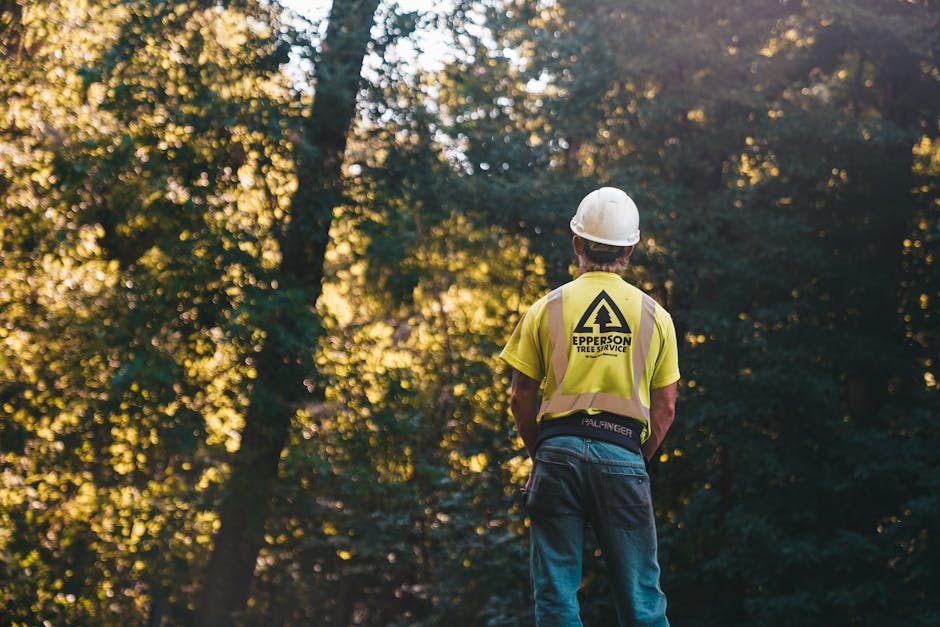
There’s a real difference between trimming a 6-foot ornamental with hand pruners and removing a limb that’s 30 feet up and weighs 200 pounds. The first one is a Saturday chore. The second one requires training, specialized equipment, and insurance. The line between the two is life and death.
The physics of tree work catch people off guard. A branch that looks manageable from the ground might weigh 300 to 500 pounds. When you cut it, the stored tension in the wood can cause it to spring in an unexpected direction. Arborists call this “spring-back” or “barber chair,” and it happens fast. A limb falling from 25 feet generates enough force to crush a skull, cave in a roof, or snap a ladder in half.
Chainsaws account for roughly 36,000 emergency room visits per year in the U.S., according to the Consumer Product Safety Commission. Homeowners make up a disproportionate share of those injuries because they often skip protective equipment entirely. No chaps, no face shield, no hearing protection. Just a T-shirt and a prayer. For a closer look at what professional removal involves, our article on what it takes to remove a 229-foot tree shows the level of gear and planning involved.
What kills tree workers
Even trained professionals face serious hazards every day. Here’s what the data actually shows about how tree workers die.
Falls from height
Climbing trees and working from bucket trucks puts you 30 to 80 feet in the air. A slip, a broken branch, or a cut rope means a fall that’s almost always fatal above 40 feet. Falls are the leading cause of death in tree care, responsible for about 30-40% of all fatalities according to OSHA enforcement data.
Professional climbers use redundant tie-in systems. That means two separate attachment points to the tree, so if one fails, the other holds. The system includes a climbing saddle (harness), a friction-saving device, and Prussik-loop backups. A homeowner on an extension ladder has zero redundancy. One gust of wind and you’re on the ground.
OSHA requires that all tree care employees working above ground use fall protection systems. The ANSI Z133 Safety Standard for Arboricultural Operations (the industry bible for tree work safety) specifies that a second tie-in point must be established before any cut is made. This standard exists because experienced climbers have been killed when a single anchor point failed after a cut changed the tree’s load dynamics.
Electrical contact
Trees near power lines are the second-leading cause of death in tree work. A branch touching a 7,200-volt distribution line (the standard for residential neighborhoods) kills instantly. You don’t have to touch the wire directly. Voltage can arc through a wet branch, a metal pole saw, or the sap running down the trunk. The minimum safe working distance from a 7,200-volt line is 10 feet, per OSHA regulations.
Only utility-trained line clearance arborists should work near energized wires. These workers carry specific certifications beyond standard arborist credentials. If a tree on your property has branches within 10 feet of power lines, call your utility company first. In California, PG&E will trim trees near their lines at no charge. Most utilities across the country will do the same.
Struck-by injuries
Falling branches and trees don’t always go where you expect. A gust of wind, a hidden crack in the trunk, or an incorrect notch on a felling cut can send a tree in the wrong direction. A 12-inch diameter branch weighing 200 pounds that falls 30 feet hits the ground (or a person) at about 30 miles per hour. That’s the equivalent impact of getting hit by a car.
Professionals use rigging systems to lower limbs with ropes and pulleys, especially near structures. A good crew will plan every cut before the climber goes up and establish a clear drop zone on the ground. If the crew working on your neighbor’s tree hasn’t roped off the drop zone, that’s a crew you should watch from inside your house.
Equipment
Wood chippers, stump grinders, and chainsaws are unforgiving machines. A commercial wood chipper pulls material in at 100-200 feet per minute through hardened steel knives spinning at 1,000+ RPM. A loose sleeve, a glove, a lanyard can catch and pull you in faster than you can react. Rick Risinger’s accident happened in seconds.
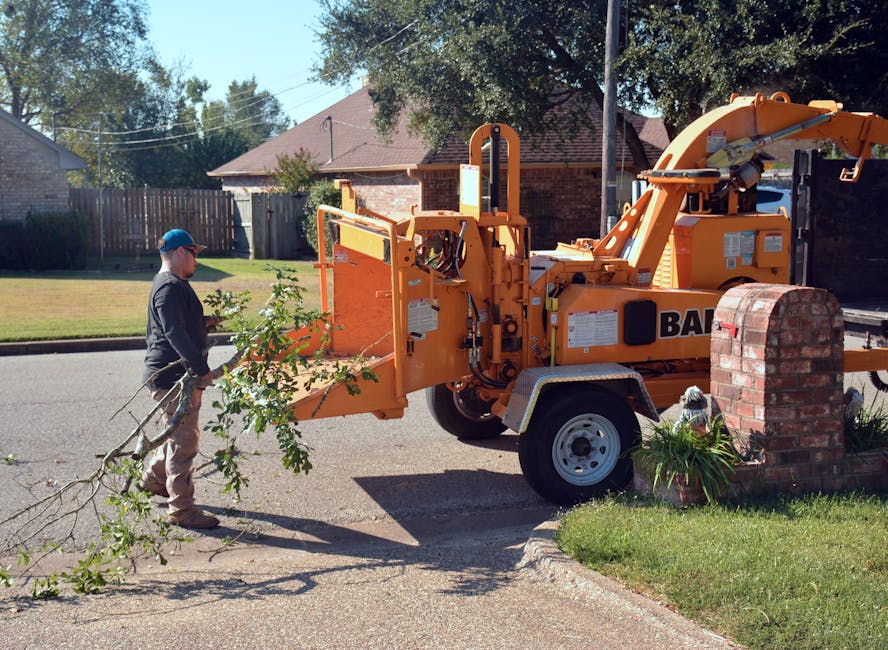
OSHA and ANSI Z133 require that all wood chippers manufactured after 2006 include a feed-control bar (sometimes called an emergency stop bar) at the infeed hopper. This bar runs across the opening and, when pushed, stops and reverses the feed rollers. Operators are trained to always push branches in butt-end first, stand to the side of the infeed, and never reach into the hopper. Workers should remove lanyards, loose clothing, and anything that could snag before operating a chipper. These rules exist because of deaths like Rick’s.
The protective equipment that separates pros from amateurs
Professional tree workers wear specific personal protective equipment (PPE) designed for their exact hazards. If a company shows up to your property and the crew isn’t wearing this gear, that tells you everything about how seriously they take safety.
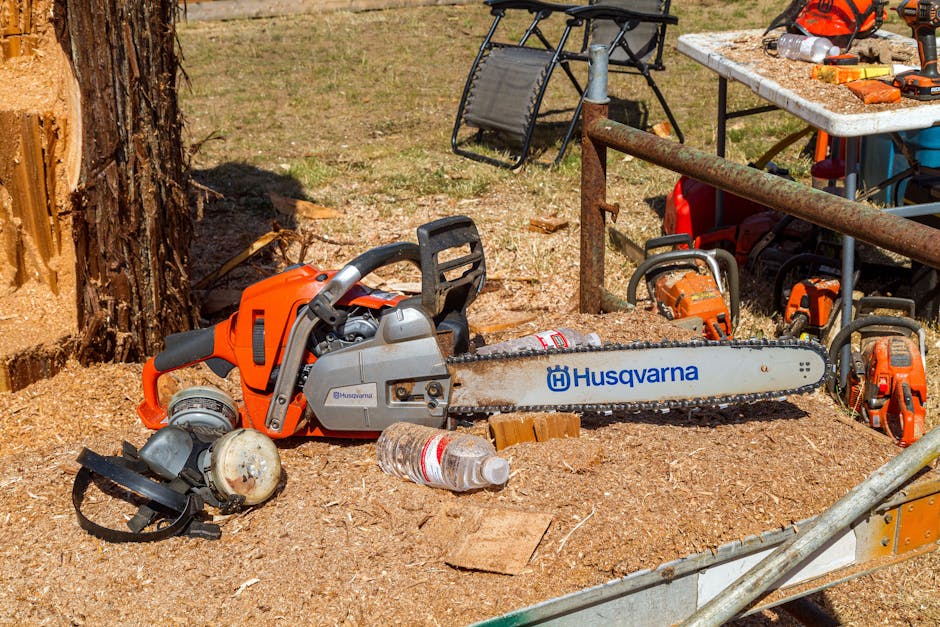
Hard hat with face screen and ear muffs. A Type I, Class E arborist helmet protects against falling objects and limited electrical contact. The integrated face mesh stops wood chips and sawdust. Ear muffs bring chainsaw noise (around 110 decibels) down to a safe level. Without hearing protection, a chainsaw operator will suffer permanent hearing damage within minutes.
Chainsaw chaps or pants. These contain layers of cut-resistant Kevlar or ballistic nylon fiber. When a chainsaw contacts the fabric, the fibers pull out and bind the saw’s drive sprocket, stopping the chain in fractions of a second. Chainsaw chaps have saved thousands of legs. OSHA requires them for all ground-level chainsaw work. There’s no excuse for running a chainsaw without them.
Eye protection. ANSI-rated safety glasses or goggles. A twig in the eye is one of the most common tree trimming injuries and one of the most preventable.
Climbing saddle and ropes. Professional-grade saddles distribute the climber’s weight across the hips and thighs. Climbing ropes are 12-strand, half-inch diameter, rated for 5,400+ pounds of tensile strength. Compare that to the 50-foot extension cord someone ties around their waist at home.
Steel-toed, cut-resistant boots. Chainsaw-rated boots with Kevlar layers, steel toes, and aggressive tread for grip on wet bark. Regular work boots don’t cut it.
How to hire a tree service the right way
Honoring Rick Risinger and others who’ve died doing this work means taking tree safety seriously. That starts with who you hire. If you’re not sure where to begin, this guide on choosing the right arborist walks through what to look for and what to avoid.
Verify ISA certification. The International Society of Arboriculture (ISA) certifies arborists through written exams and continuing education. An ISA Certified Arborist has demonstrated knowledge of tree biology, pruning standards, and safety practices. You can verify credentials at treesaregood.org. Beyond the base certification, there’s ISA Tree Risk Assessment Qualification (TRAQ) for arborists who evaluate hazardous trees, and ISA Board Certified Master Arborist, the highest level. Not every good tree worker has the certification, but it’s the most reliable indicator that someone knows what they’re doing.
Require proof of insurance. Any legitimate tree service carries general liability insurance (typically $1 million minimum) and workers’ compensation coverage. Ask to see the certificate of insurance before work begins. Call the insurance company directly to verify it’s active. If a worker gets hurt on your property and they don’t have workers’ comp, you could be liable for their medical bills. In California, homeowners have been hit with six-figure judgments when uninsured workers fell on their property. That’s not hypothetical.
Be skeptical of low bids. A professional crew with insurance, certified climbers, and proper equipment has real overhead. Workers’ comp alone costs tree service companies $15-25 per $100 of payroll in most states because the industry is so dangerous. If one company bids $2,500 to remove a tree and another bids $800, the $800 crew is almost certainly cutting corners on insurance, training, or both. That $1,700 in savings evaporates if they drop a limb on your roof or a worker falls and sues you.
Ask about their safety practices. A good company will explain their plan before starting: where the limbs will fall, how they’ll rig branches near structures, what equipment they’ll use. They should do a hazard assessment that includes checking for power lines, dead wood in the canopy, and soil conditions around the root zone. If they show up, fire up a chainsaw, and start climbing without discussion, that’s a red flag. For tips on understanding what good tree care looks like, our guide to protecting your trees before the next storm covers the kind of planning a professional should do.
Check for TCIA accreditation. The Tree Care Industry Association runs a company accreditation program that verifies a business meets safety, training, and business practice standards. Fewer than 400 companies nationwide hold this accreditation. It’s not required, but it separates the serious operations from the guy with a truck and a chainsaw.
What homeowners can safely do themselves
Not all tree work requires a professional. Here’s where the line is.
Safe for homeowners: Pruning branches you can reach from the ground with hand pruners, loppers, or a pole saw. Removing dead branches under 2 inches in diameter. Trimming small ornamental trees under 10 feet tall. Light shaping and sucker removal. For guidance on doing these jobs well, our tree trimming tips guide covers the basics, and when to trim your tree explains the timing by species so you don’t spread disease or kill next year’s blooms.
Call a professional for: Any branch you can’t reach from the ground. Any branch thicker than 4 inches. Any tree near power lines (within 10 feet). Any tree leaning toward a structure. Anything that requires a chainsaw above shoulder height. Anything that requires a ladder taller than 6 feet. If you need a full tree taken down, our tree removal guide walks through the process, permits, and costs.
The dividing line is simple: if you need to leave the ground or use a chainsaw above your head, the job is beyond DIY.
Basic safety rules for any tree work
If you’re doing light pruning yourself, these rules are non-negotiable.
Wear safety glasses. A twig in the eye is one of the most common tree trimming injuries and one of the most preventable.
Wear gloves with good grip. Leather work gloves keep your hands on the tool and thorns out of your palms.
Wear a hard hat if you’re working under branches. If someone is cutting above you, or if there’s dead wood in the canopy that could fall, a $25 hard hat is cheap insurance.
Never work alone. Have someone nearby who can call 911 if something goes wrong. A person who falls from a ladder and hits their head has minutes before brain swelling becomes fatal. Seconds matter.
Don’t use a chainsaw on a ladder. Ever. If the saw kicks back, you have no stable base to absorb the force. You’ll fall with a running chainsaw in your hands. People die this way every year. OSHA specifically prohibits chainsaw use from portable ladders. This one rule, if followed, would prevent dozens of homeowner deaths annually.
Keep bystanders and children well away from the work area. ANSI Z133 requires a drop zone of at least two tree-lengths for felling operations. For pruning, keep people at least twice the height of the branch being cut away from the work zone. A falling branch can bounce, roll, or kick sideways in ways you can’t predict.
Check above before you cut. Look for power lines, dead branches, bee nests, and other hazards before making any cut. Do a full walk-around of the tree and look up. If there’s something that makes your gut feel wrong, it is wrong. Trust that instinct. For broader seasonal guidance on keeping your trees healthy and safe, our spring tree care tips covers what to inspect when winter ends.
What to do if you see unsafe tree work
If a tree crew is working on your street without hard hats, without ropes, without any visible safety gear, you can report them. OSHA takes anonymous complaints. Call 1-800-321-6742 or file online at osha.gov. You might save someone’s life.
If a homeowner neighbor is doing something dangerous (chainsawing from a ladder, free-climbing without ropes), say something. It’s awkward. But a broken friendship is better than attending a funeral. I’ve had that conversation twice with neighbors. Neither one was happy about it at the time. Both are alive.
If you’re interested in how hiring reliable home services works across other trades, the same principles apply: verify credentials, check insurance, and be suspicious of anyone whose price is far below the rest.
Rick Risinger deserved better
Rick Risinger went to work that day like he had hundreds of times before. He was experienced. He was a professional. And a momentary equipment interaction cost him his life. That’s the nature of this work. Even when you do everything right, the margin for error is razor-thin.
The least we can do is take tree work seriously. Hire qualified people. Pay fair rates so they can afford proper insurance, continuing education, and ANSI-compliant equipment. Don’t try to save a few hundred dollars by doing something dangerous yourself. And when you see a tree crew working on your street, give them space and respect. They’re doing one of the most dangerous jobs there is, and they deserve to go home safely at the end of the day.