Protecting your trees before the next storm


The time to protect your trees from storm damage is right now, before storm season starts. Find an arborist, get a risk assessment, prune the obvious problems, and plant species that hold up in wind. Once the weather hits, you’ll be competing with every other homeowner for the same handful of qualified tree professionals. Beyond your trees, consider protecting your home during hurricanes as part of your overall storm readiness plan. Existing customers always go to the front of the line.
I’ve lived through enough Northern California wind events to know: the damage is almost always predictable. That dead branch you’ve been ignoring for two years? It’s coming down. The Bradford Pear your builder planted in 2005? It’s going to split right down the middle. The tree with the two trunks growing in a tight V? One of those trunks is leaving during the next 40 mph gust.
Find your arborist before you need one
This tip comes from Mark Chisholm, a third-generation arborist from New Jersey and a Stihl spokesperson. His point is simple: arborists prioritize their existing customers after a storm. If the first time you call is when a tree is leaning on your garage, you’re going to wait. Could be days. Could be a week.
Get an arborist out for a routine assessment now. Have them walk your property, flag any trees with structural problems, and take care of obvious hazards. This does two things. It reduces your storm risk immediately, and it puts you on an arborist’s client list so you get faster service when something goes wrong.
Ask for an ISA-certified arborist specifically. The International Society of Arboriculture maintains a searchable directory at treesaregood.org. Get a written assessment. Keep it with your homeowner’s insurance paperwork, because you may need it for a claim later.
A routine assessment runs $150-$400 depending on property size and number of trees. That same arborist charging emergency rates after a storm? $300-$500 per hour, if they can even get to you.
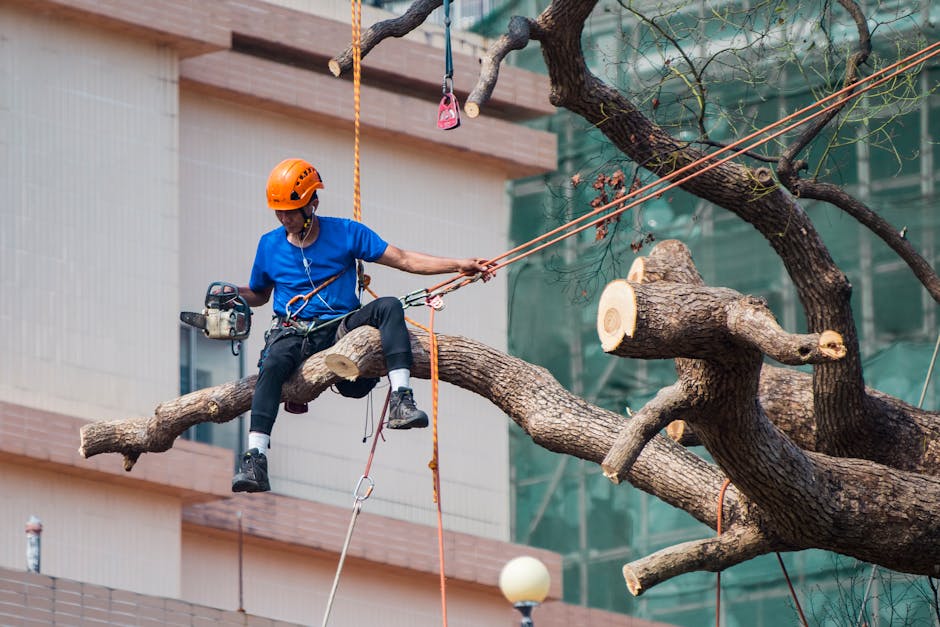
What a pre-storm assessment actually covers
A qualified arborist will spot problems you can’t see from the ground. The ISA’s Tree Risk Assessment Qualification (TRAQ) training teaches arborists to evaluate three things: the likelihood of failure, the size of the part that could fail, and the target it would hit. Here’s what they’re looking for on your property:
- Dead branches in the upper canopy. These come down in the first strong wind. You may not even notice them from ground level, but an arborist with binoculars will spot them in minutes. A dead branch over 4 inches in diameter and 20 feet up can punch through a car roof.
- Weak branch unions (codominant stems). Two trunks or branches forming a tight V-shape with included bark between them. This is the number one structural defect in residential trees. The bark trapped inside the union prevents the wood from fusing. These splits are responsible for more storm failures than any other single cause.
- Root damage from construction or soil changes. Trenching through roots for a new irrigation line, piling soil over the root zone during a remodel, parking heavy equipment under the canopy. All of these compromise stability. Root damage can take 3-7 years to show symptoms in the crown, so the tree may look fine from above while its anchor is rotting.
- Internal decay. Cavities, fungal conks (shelf mushrooms growing from the trunk), soft or spongy bark, and carpenter ant activity all indicate wood that’s lost structural strength. An arborist may use a resistograph or sonic tomograph to map decay inside a trunk without cutting into it.
- Leaning trees that have shifted recently. A tree that’s always grown at an angle is usually fine. A tree that used to be straight and is now leaning? That means root failure. Look for soil heaving on the opposite side of the lean and cracked soil around the base.
Addressing these issues before a storm is cheaper and safer than dealing with them during one. Removing a dead branch in calm weather costs $200-$500. Removing that same branch after it’s crashed through your fence? $1,500-$3,000 including the fence repair.
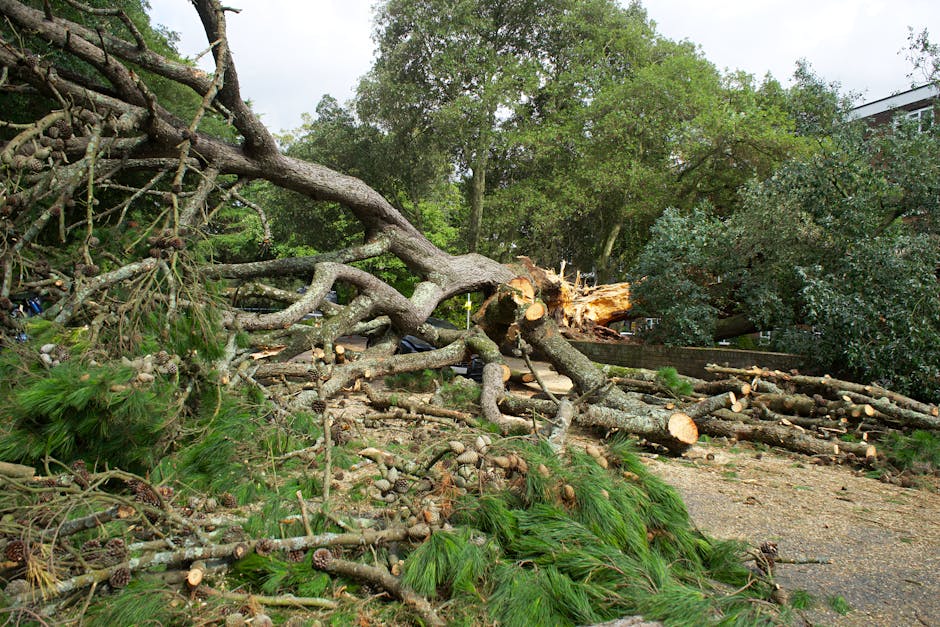
The branches most likely to fail (and how to spot them)
You don’t need to be an arborist to spot the most common pre-failure warning signs. Walk your property in late winter when deciduous trees are bare. Look for:
Hangers and widow-makers. Broken branches caught in the canopy that haven’t fallen yet. These can drop at any time, not just during storms. If you can see one from the ground, call someone.
Branches with cracks along the top. A crack running along the upper surface of a branch means the wood is failing in tension. The branch is bending under its own weight and starting to tear apart. It will fail. The only question is when.
Long, horizontal branches without lateral branching. An extended branch with no secondary branches to reduce its wind load acts like a sail. The ISA calls this “end-weight loading.” These branches catch wind instead of letting it pass through.
Branches crossing or rubbing against each other. Where two branches rub, they wound each other. Wounded wood decays. Decayed wood breaks. Cut one of them out during your next pruning session.
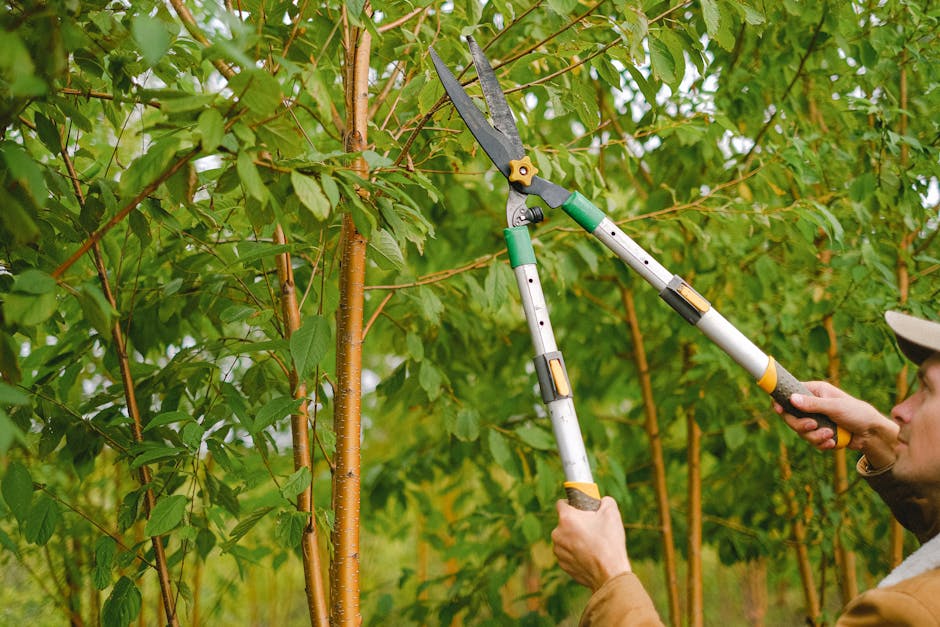
Pruning specifically for wind resistance
Regular pruning doesn’t automatically make a tree wind-resistant. Storm-prep pruning is different from pruning for shape or aesthetics. The goal is reducing wind load while preserving the tree’s structural integrity.
Thin the canopy, don’t top it. Thinning removes select branches back to their point of origin, opening gaps in the canopy that let wind pass through. Topping (cutting branches back to stubs) creates dense regrowth that catches more wind than the original canopy. A topped tree is more dangerous in a storm than an unpruned one.
Reduce end weight on long limbs. Shortening overextended branches by cutting back to a lateral branch (called reduction pruning) lowers the lever force on the branch union. A 30-foot branch generates far more torque in a wind gust than a 20-foot branch.
Remove codominant stems early. If a young tree is developing two competing leaders, remove one now while the tree is small enough for the wound to heal over. Waiting until the tree is 30 feet tall turns a $200 pruning job into a $2,000 structural problem.
Don’t lion-tail. Stripping all the interior branches and leaving foliage only at the tips is called lion-tailing. Some tree services do this because it looks dramatic and it’s fast. It actually makes the tree more vulnerable because it moves all the wind load to the branch tips and eliminates the damping effect of interior foliage.
The best time for structural pruning on most species is during dormancy, December through February. For oaks specifically, prune in the dry season (June through September in Northern California) to avoid oak wilt transmission by bark beetles.
Safety during storm cleanup
If you’re doing your own cleanup after a storm, respect the hazards. Look up before you start working. Branches hung up in the canopy can fall without warning. Bent trees and limbs under tension can snap when cut, and they don’t always go where you expect.
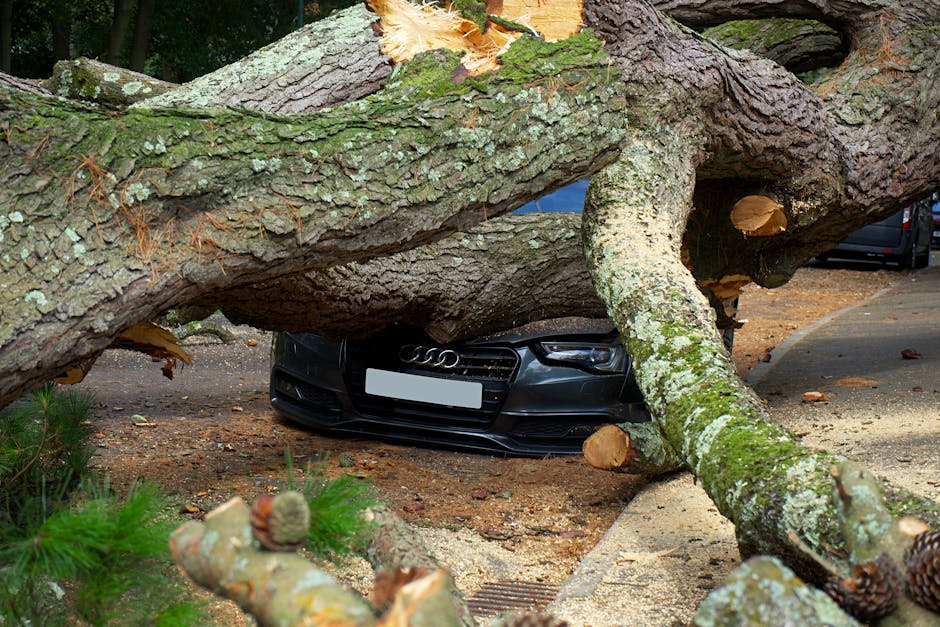
Be extremely careful with chainsaws. Storm damage creates unpredictable cutting conditions: branches under pressure, odd angles, wood twisted by wind. A branch under compression will pinch your bar. A branch under tension will spring open when you cut it. If you’re not experienced reading these forces, don’t learn on storm damage. Hire a professional.
Every year homeowners are killed or seriously injured doing their own storm cleanup. As we detail in our guide on tree trimmer safety, even trained professionals die in tree work. The Bureau of Labor Statistics ranks it among the ten most dangerous occupations in the country. A homeowner on a ladder with a chainsaw after a storm is operating under the worst possible conditions.
And as we cover in detail in our post-storm tree care guide, be wary of strangers knocking on your door offering tree work. Storms bring out unqualified operators looking to make quick cash. No ISA certification, no insurance, no accountability.
How to plant trees that handle severe weather
If you’re adding trees to your property, species selection matters as much as anything else for storm resistance. Two principles to keep in mind.
Native trees outperform exotics in storms. Trees native to your region evolved with your local weather patterns. They’re adapted to the wind speeds, ice loads, and soil conditions of your area. An ornamental Bradford Pear (Pyrus calleryana ‘Bradford’) may look great on a calm spring day and split in half during the first 35 mph wind event. It’s one of the most storm-prone trees planted in residential yards in the last 40 years. Here in NorCal, our native Valley Oak (Quercus lobata) and Coast Live Oak (Quercus agrifolia) have survived thousands of years of Pacific storms. That’s not an accident. Both are UC Davis Arboretum All-Stars, selected specifically because they thrive in Sacramento Valley heat and clay soils with little to no summer water once established. Valley Oak reaches 40-70 feet tall with a canopy spread to match, and its deep taproots anchor it against wind loads that topple shallow-rooted exotics.
Trees in groups survive better than isolated specimens. Trees that grow together develop mutual wind resistance. Their root systems interlock, their canopies buffer each other, and they bend together rather than taking the full force of the wind individually. A single tree standing alone in an open yard is far more exposed than a cluster of three or four. If you’re planting new trees, group them. Leave 15-20 feet between trunks for most medium-sized species, closer for smaller ornamentals.
Specific storm-resistant species worth planting
Not all trees handle wind equally. Based on university research and observed storm performance, these species consistently hold up:
- Bald Cypress (Taxodium distichum), zones 4-10. One of the top performers in hurricane wind studies along the Gulf Coast. Deep, fibrous root system. The UC Davis Arboretum grows Bald Cypress successfully in the Sacramento Valley, where it handles both the summer heat and periodic flooding. It takes full sun to part shade and tolerates a wide range of soils, from clay to sand. Mature trees reach 50-70 feet tall with a 20-30 foot spread.
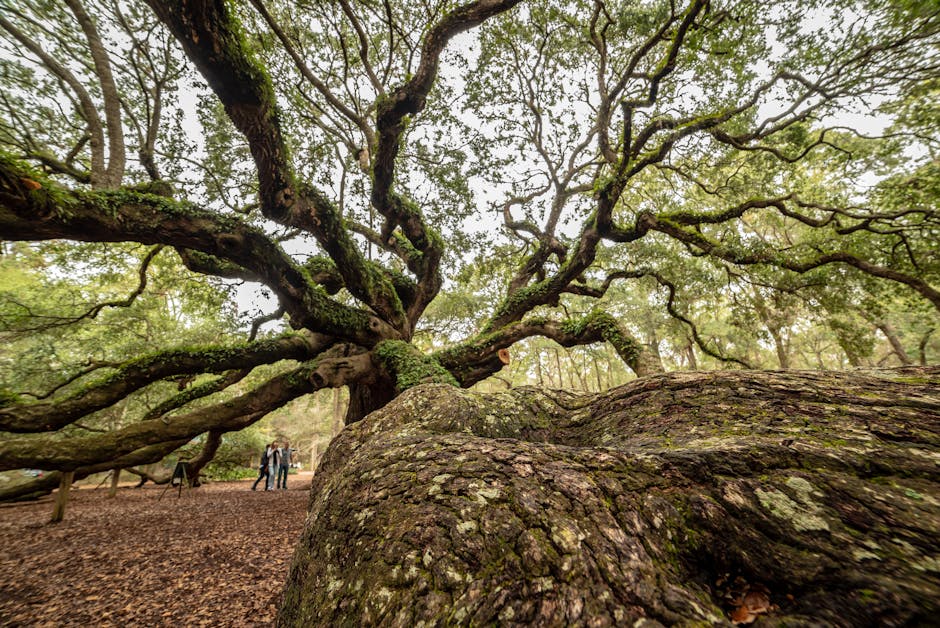
- Live Oak (Quercus virginiana) or Coast Live Oak (Quercus agrifolia), zones 7-10. Low, spreading canopy sheds wind. Massive root plate. The tree most likely to still be standing after a Category 3 hurricane. Coast Live Oak is a UC Davis Arboretum All-Star, proven in Sacramento Valley conditions. It needs no summer irrigation once established and thrives in full sun to part shade. Mature trees reach 20-70 feet with spreads up to 70 feet, so give it room.
- Crape Myrtle (Lagerstroemia indica), zones 6-9. Flexible wood bends rather than breaks. Small enough that failure isn’t catastrophic. We have a full guide on trimming crape myrtles to keep them healthy.
- Shumard Oak (Quercus shumardii), zones 5-9. Strong branch attachments, good root development. Faster growing than Live Oak with comparable wind resistance. Reaches 40-60 feet tall with a 40-foot spread. Handles clay soil and drought once established, and it gives you solid red fall color that most valley oaks won’t.
- Eastern Red Cedar (Juniperus virginiana), zones 2-9. Pyramidal shape sheds wind. Flexible wood. Almost never fails in storms.
Species that fail repeatedly in storms
Avoid these if you live in a wind-prone area:
- Bradford Pear (Pyrus calleryana ‘Bradford’). Tight branch angles split in wind. Average lifespan before structural failure is about 20 years. Many states are now banning sales.
- Silver Maple (Acer saccharinum). Fast growth, weak wood. Drops large branches in moderate wind. A 60-foot Silver Maple in a windstorm is a liability.
- Willow (Salix spp.). Beautiful but brittle. Branches snap constantly. You’ll be cleaning up debris after every storm.
- Eucalyptus (Eucalyptus spp.). Common in California but notorious for catastrophic failure. Heavy branches shed without warning, and entire trees can uproot from shallow root systems during saturated soil conditions plus wind.
How to read storm damage quickly
After a storm passes, you need to make quick decisions. Here’s a framework based on ISA guidelines.
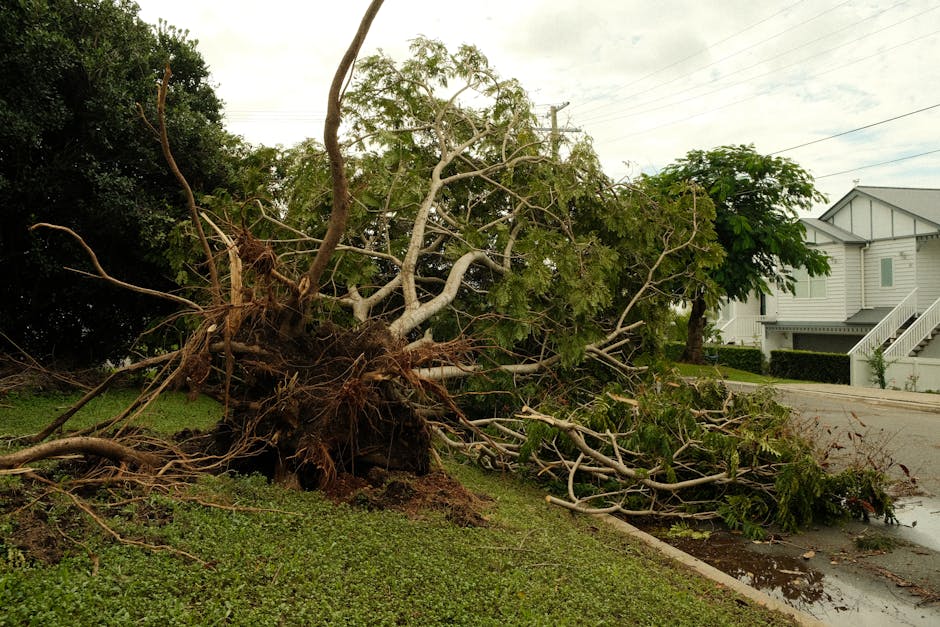
More than half the crown is gone? Remove the tree. It won’t recover structurally, and it doesn’t have enough leaf area to sustain itself. Budget $1,500-$5,000 for removal of a large shade tree, more if it’s on a structure.
Lost a couple of branches but the trunk and main scaffold limbs are intact? It’s a keeper. Prune the broken material back to the branch collar and let it recover. Most healthy trees bounce back from losing up to 25% of their crown within two to three growing seasons.
Somewhere in between? Consult an arborist. Trees are resilient and many recover from damage that looks severe at first glance. Give it a season before making a permanent decision.
Be patient with ice and snow damage specifically. Ice-bent branches often straighten as the ice melts. Don’t start cutting until the thaw. You may find the damage is less than it looked under a coat of ice.
Your insurance and storm-damaged trees
Most homeowner’s insurance policies cover tree removal if the tree falls on a structure (your house, garage, fence, or car). They typically do not cover removal of a tree that falls in your yard but doesn’t hit anything. The typical coverage cap for tree removal is $500-$1,000 per tree, which often doesn’t cover the full cost.
Document everything with photos before cleanup begins. If you had a pre-storm arborist assessment showing the tree was healthy before the storm, that strengthens your claim. If the adjuster determines the tree was dead or in obvious decline before the storm, they can deny the claim. This is another reason to get that assessment done now and keep the paperwork. For more on protecting your home investment from weather events, plan ahead while the sun is still shining.
A quick storm-prep checklist
Do this before storm season each year. In Northern California, that means before the atmospheric river season starts in October:
- Walk your property and look for dead branches, hangers, and leaning trees
- Schedule an arborist assessment ($150-$400) if it’s been more than two years
- Have codominant stems and dead wood removed from trees near structures
- Prune for wind resistance: thin canopies, reduce end weight, remove crossing branches
- Check that no trees are in contact with your roof, power lines, or neighboring structures
- Clear gutters and drains so water moves away from root zones during heavy rain
- Stake newly planted trees (planted within the last 12 months) but remove stakes after one year so roots develop proper strength
- Mulch around tree bases with 3-4 inches of wood chips (not piled against the trunk) to protect roots and improve drainage
For the full breakdown on assessing and responding to tree damage after it happens, our storm damage tree care guide walks through every scenario. For year-round maintenance that keeps trees strong, start with our spring tree care checklist.
An hour of prevention with an arborist now can save you thousands in emergency removal costs later. Don’t wait for the forecast.