Meanings and symbolism of trees

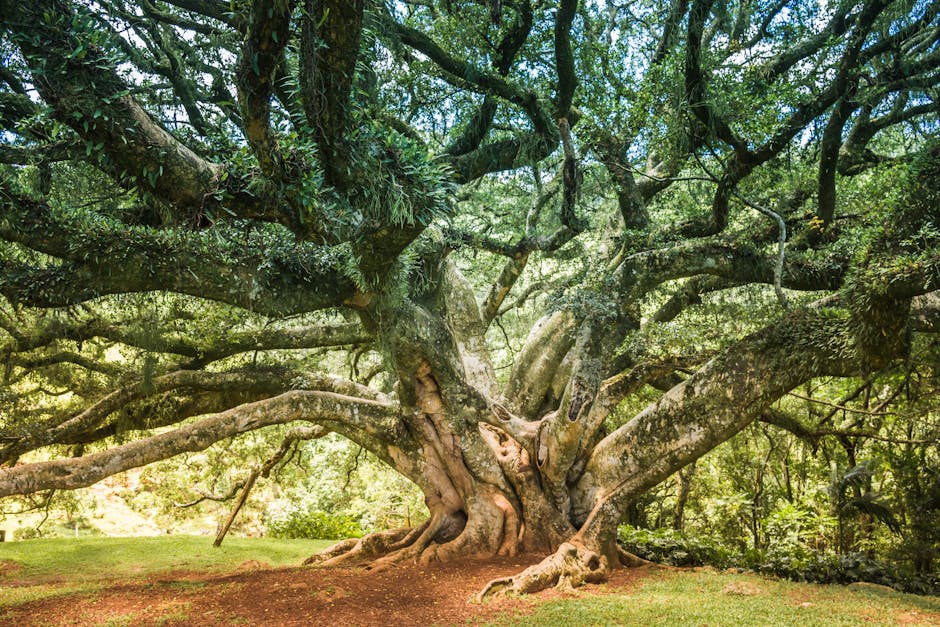
When you plant a tree, you’re planting something humans have been telling stories about for thousands of years. Every major religion, every ancient culture, every mythology puts trees at the center of its biggest moments. The Norse gods lived in a giant ash tree. Buddha found enlightenment under a fig. Moses built the Ark of the Covenant from acacia wood. The symbolism of trees runs through every civilization that ever planted one.
Here are fourteen tree species and the myths, legends, and cultural traditions that come with them. If you’re choosing a tree for your yard, you might as well pick one with a good story. For a deeper dive into the cultural meanings of specific tree species, there’s an extended guide covering symbolism across world cultures.
Acacia
The name comes from the Greek word akis, meaning “thorn,” and there are over 1,300 species worldwide. Most people picture the flat-topped African savanna tree, but acacias grow on every continent except Antarctica and Europe.
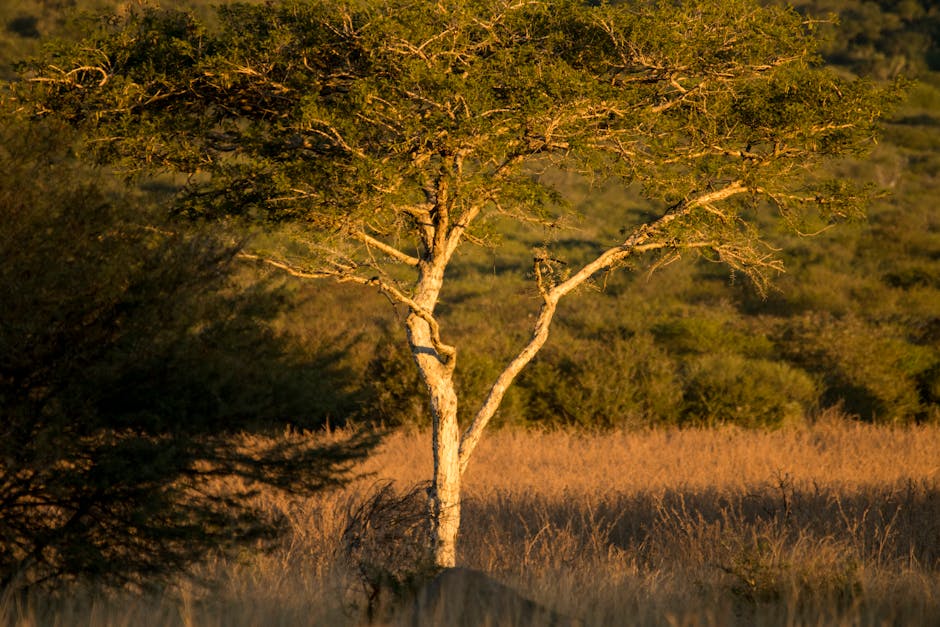
In the Old Testament, Moses used acacia wood (called shittah in Hebrew) to build both the Ark of the Covenant and the Tabernacle. The wood was chosen because it’s one of the hardest and most durable timbers in the region. Acacia (Vachellia and Senegalia species) resists rot, insects, and warping. Pieces recovered from Egyptian tombs still look solid after 3,000 years.
The acacia shows up in other traditions too. It’s one of four primary “trees of the gods” in Chinese mythology. Both Buddhist and Hindu traditions consider it sacred. In Freemasonry, the acacia branch became a symbol of the immortality of the soul, and that tradition dates back to at least the 1700s.
If you’ve seen an acacia in the wild, you know it has a sculptural, windswept look that photographs well. In Northern California, the Bailey Acacia (Acacia baileyana) grows well in zones 8-10 and puts out brilliant yellow flower clusters in late January and February. It tops out around 20-30 feet, needs full sun, and handles drought well once established. The UC Davis Arboretum grows Bailey Acacia, where it performs well in the Sacramento Valley’s heat and low-water conditions. Fair warning: they’re short-lived trees, usually 20-30 years, and the wood gets brittle with age.
Alder
Alder (Alnus species) belongs to the birch family and is a deciduous tree found throughout the Northern Hemisphere. There are about 35 species, and they do something unusual for non-legume trees: they fix nitrogen in the soil. Alder roots host bacteria that pull nitrogen from the air and convert it into plant-available form. Plant one, and the soil around it gets richer over time.
Native Americans used Red Alder (Alnus rubra) bark as medicine for poison oak, insect bites, skin irritations, and tuberculosis treatment. The bark contains salicin, the same compound that led to the development of aspirin. Along the Pacific Northwest coast, Red Alder grows everywhere. It’s one of the most common hardwoods from Southern California to Alaska.
The British considered alder a sacred tree, and it appears in the Welsh tale “Romance of Branwen” as a tree of deep cultural importance. In Celtic tree lore, alder represents the bridge between male and female principles, and between the mortal world and the realm of the dead. Alder wood turns from white to blood-red when freshly cut, which probably contributed to the supernatural associations.
Here’s a fact that surprises people: Fender has been using alder wood for electric guitar bodies since the 1950s. That Stratocaster tone? Partly alder. The wood is light, resonant, and takes finish well. Venice was built on alder pilings. The wood is nearly indestructible when submerged in water, which is the opposite of what you’d expect from a deciduous hardwood.
Almond
The almond (Prunus dulcis) is a small deciduous tree native to Iran and the surrounding region. It carries heavy symbolism in Christianity. In medieval Christian art, the almond shape (called a mandorla) surrounding Christ and the Virgin Mary represented divine approval and holy light. The Pope’s ceremonial staff is made from an almond branch. The Bible mentions almonds 73 times.
Almonds bloom early. In California’s Central Valley, commercial orchards explode with white and pink blossoms in February, often weeks before any other fruit tree. That timing matters for the symbolism. Ancient cultures saw the almond as the “watchful tree” because it wakes up first. In Hebrew, the word for almond (shakeid) comes from the root meaning “to watch” or “to wake.”
The Greeks had their own almond stories. One legend says the hero Demophon’s lover Phyllis was transformed into an almond tree after dying of heartbreak. The tree stood bare and lifeless until Demophon returned and embraced it, and then it burst into bloom. To this day, almonds are served at Greek weddings as a symbol of hope and enduring love. Five sugared almonds represent health, wealth, happiness, fertility, and long life.
California produces about 80% of the world’s almonds, and the Sacramento Valley is the heart of that industry. If you live in zones 7-9, you can grow one in your yard. They need full sun, well-drained soil (they won’t tolerate waterlogged roots), and a second variety nearby for cross-pollination. ‘All-in-One’ is a partially self-fertile variety that works for smaller yards. Most backyard almond trees reach 15-25 feet tall. They’re drought-tolerant once established but produce better with moderate summer irrigation, about the same as a peach tree.
Apple
With over 7,500 cultivars and origins in the mountains of Kazakhstan (not Western Asia as commonly stated), the apple (Malus domestica) might be the most storied fruit tree on earth. DNA studies traced all modern apples back to Malus sieversii, a wild apple that still grows in the Tian Shan mountains.
In Norse mythology, the goddess Idun kept “apples of immortality” that the gods depended on to stay young. When the trickster Loki let a giant steal Idun and her apples, the gods began to age and weaken until they rescued her. The Trojan War started because the goddess Eris threw an Apple of Discord among three goddesses, asking who was the fairest. Paris chose Aphrodite, got Helen, and Troy burned for it. Hercules had to steal golden apples from the garden of the Hesperides as one of his twelve labors.
Ancient Greeks had a romantic tradition: throwing an apple at someone was a declaration of love. Catching it meant you accepted.
The old German custom was to plant an apple tree when a boy was born and a pear tree for a girl. The health of the tree predicted the child’s fortune. And the apple shows up in at least four Grimm’s Fairy Tales, always as an object of magic or temptation.
Worth noting: the “apple” in the Garden of Eden was probably not an apple at all. The Hebrew word peri just means “fruit.” Latin translators used malum (apple), possibly because the Latin word for “evil” is also malum. A translation coincidence shaped Western art for centuries.
If you want an apple tree in your yard, ‘Fuji’ and ‘Gala’ varieties do well in zones 6-9. Semi-dwarf rootstock keeps them at 12-15 feet. They need 500-1,000 chill hours, so they’re fine in most of Northern California.
Ash
The name derives from Old English and Latin words meaning “spear,” which tells you what people first made from the wood. Ash (Fraxinus species) is strong, flexible, and shock-absorbent. That combination made it the go-to wood for weapon handles, tool handles, and eventually baseball bats. Louisville Slugger used ash almost exclusively for over a century.
Finding a double ash leaf was considered good luck across Europe. Early Europeans believed ash trees repelled snakes. Cupid’s arrows were said to be made of ash wood, which adds a romantic twist to a tree named for weaponry.
But the biggest ash story comes from Norse mythology. Yggdrasil, the World Tree, was a giant ash that held up the nine worlds of existence. Its roots reached down to the realm of the dead. Its branches held up the sky. An eagle perched at its crown. A serpent gnawed at its roots. A squirrel named Ratatoskr ran up and down the trunk, carrying insults between them. All of existence hung from its branches. In the same mythology, the first man (Ask) was created from an ash tree, and the first woman (Embla) from an elm.
The Greeks contributed too. The Meliae were ash tree nymphs, born from drops of blood when Kronos castrated his father Ouranos. They were said to be among the oldest living beings, older than the Olympian gods.
A hard truth for modern planters: the Emerald Ash Borer has killed hundreds of millions of ash trees across North America since it arrived around 2002. The USDA considers it the most destructive forest insect in U.S. history. If you live east of the Rockies, planting an ash tree today is a gamble. In California, the pest hasn’t arrived yet, but it’s a when-not-if situation. Valley Ash (Fraxinus velutina) and Oregon Ash (Fraxinus latifolia) still grow well in zones 7-9 here. Oregon Ash is native to Northern California’s riparian areas and grows 40-60 feet tall in full sun with moderate water. It handles seasonal flooding and clay soils. But keep an eye on Emerald Ash Borer quarantine maps before planting any ash species.
Beech
Before paper existed, Germanic peoples carved writing into beech bark and thin beech boards. The English word “book” comes from the Old English boc, which derives from bece (beech). The German word for book (Buch) and beech (Buche) are nearly identical. Trees were our first books.
Beech (Fagus species) grows slowly but lives a long time. European Beech (Fagus sylvatica) can live 300-400 years. American Beech (Fagus grandifolia) regularly reaches 200. The smooth, silver-gray bark makes them easy to identify and, unfortunately, easy to carve initials into. (Don’t. It damages the tree and looks terrible.)
Beech logs burn to produce the smoke that dries malts in traditional German smoked beers (Rauchbier). Budweiser still uses beech chips as part of their aging process, though they’ll tell you it’s for smoothness, not smoke. The mythological ship Argo, which carried Jason and the Argonauts, was reportedly built from beech wood. The prow could speak prophecies because it was cut from a sacred grove.
American Beech grows in zones 3-9 and eventually reaches 50-70 feet with a 40-foot spread. The copper-leaved cultivars (‘Riversii’ and ‘Purpurea’) are especially good-looking in a yard with room. They need acid to neutral soil and don’t handle compacted or waterlogged ground.
Birch
The birch (Betula species) carries more cultural weight across more countries than almost any other tree. That white bark stands out in any landscape, and people have been reading meaning into it for millennia.
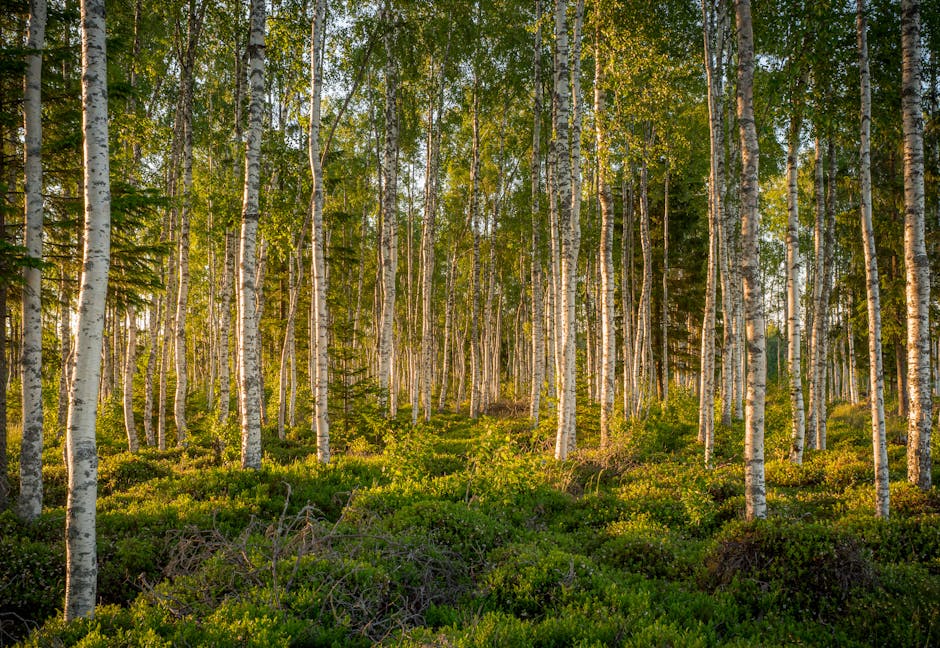
Russians worship the birch as a goddess during Green Week (Semik) and consider it their national tree. In Germany and Central Europe, birch branches decorate churches and homes during the Pentecost feast. Rural communities across Eastern Europe and Russia traditionally drink birch sap as a common beverage, and you can still buy it bottled in specialty stores.
In 1920, the American Forestry Association named a birch the first Mother Tree of America. The Finnish national epic Kalevala designates it a holy tree. In it, the birch is spared when all other trees are cut down to clear land, so that birds would have a place to sing. Gaelic folklore connects birch with death, fairies, and the dead returning from the grave. The birch was also the tree of beginnings: it colonizes disturbed ground before any other species.
One German tradition still practiced today: on May 1st (Maifeiertag), a young man decorates a birch tree outside a woman’s window to show romantic interest. And in 1888, after a devastating fire swept through the Swedish city of Umea, the city planted thousands of silver birches along the streets as a firebreak. They’re still there.
Paper Birch (Betula papyrifera) grows in zones 2-7 and tops out around 50-70 feet, but it struggles with Sacramento Valley heat and really belongs in cooler climates. River Birch (Betula nigra) handles the heat better, growing in zones 4-9. If you’re in Northern California, River Birch is your better bet. It needs regular water (birches are not drought-tolerant trees), full sun to part shade, and acidic to neutral soil. The UC Davis campus has River Birch specimens growing along waterways where they get the moisture their roots demand. Don’t plant one in a dry, unirrigated corner of your yard and expect good results. Budget $200-400 for a nursery specimen.
Fig
Roman legend says a wild fig tree (Ficus carica) caught the basket carrying Romulus and Remus as it floated down the Tiber River, saving the future founders of Rome. That specific tree, the Ficus Ruminalis, stood at the base of the Palatine Hill, and Romans tended it for centuries. When it finally died, public panic followed. The Romans considered figs sacred to Bacchus, their god of wine and revelry. The goddess Demeter was said to have revealed the fig fruit to mortals as a gift.
The most famous fig reference is biblical. Adam and Eve covered themselves with fig leaves after eating the forbidden fruit, which is why fig leaves became the standard cover for nudity in Western art and sculpture for centuries. During the Counter-Reformation, the Vatican commissioned artists to paint fig leaves over nude figures in Michelangelo’s Sistine Chapel. Some were later removed during restoration.
And then there’s Buddha. He achieved enlightenment sitting under a bodhi tree, which is Ficus religiosa, a species of fig native to the Indian subcontinent. Cuttings from the original tree (or trees claimed to descend from it) grow at Buddhist temples across Southeast Asia. The Jaya Sri Maha Bodhi in Sri Lanka, planted in 288 BC from a cutting of the original, may be the oldest living human-planted tree in the world.
If you’re keeping score, figs show up in Roman founding myths, Greek mythology, the Bible, and Buddhism. That’s a well-traveled tree.
Common figs grow well in zones 7-11 and thrive in Northern California. ‘Black Mission’ and ‘Brown Turkey’ are the standard backyard varieties. They reach 15-30 feet, produce fruit twice a year (June and August), and handle drought once established. Figs want full sun and well-drained soil. In the Sacramento Valley, they’re one of the easiest fruit trees to grow because they tolerate our alkaline clay soils and summer heat without fuss. A 5-gallon nursery fig costs $30-60.
Hazel
Celtic mythology tells the story of the Salmon of Knowledge, a fish that lived in the Well of Wisdom and ate nine nuts of poetic wisdom from a sacred hazel tree (Corylus avellana). The nuts gave the salmon all the world’s knowledge. The young Fionn mac Cumhaill was tasked with cooking the salmon but was forbidden from eating it. He burned his thumb on the fish, stuck it in his mouth to cool the burn, and accidentally gained all the world’s knowledge. Hazelnuts in Celtic tradition represent wisdom and artistic inspiration, and the hazel tree stood at the heart of the Otherworld.
Hazel has practical magic too. “Water witching” with a forked hazel branch (dowsing) was a common practice across Europe for centuries. Whether it works depends on who you ask. Grimm’s Fairy Tales says hazel branches offer the greatest protection from snakes, which is a recurring theme in European tree lore.
Hazel grows in zones 4-8 and tops out at 15-20 feet. The European Filbert (Corylus avellana) produces the hazelnuts you buy in stores. ‘Barcelona’ and ‘Butler’ are the main commercial varieties. In Oregon’s Willamette Valley, hazelnuts are a $700 million crop. For a backyard nut tree that doesn’t take over, hazel is a strong choice. They start producing nuts in 3-4 years.
Hemlock
Not to be confused with the poisonous hemlock plant that killed Socrates (that’s Conium maculatum, an herbaceous weed, not a tree). The hemlock tree (Tsuga species) is a stately evergreen conifer, and in Chinese mythology it ranks as one of four primary trees of the gods alongside acacia, sandalwood, and pine.
Eastern Hemlock (Tsuga canadensis) is the state tree of Pennsylvania and can live over 500 years. The Tsuga genus name comes from the Japanese word for the tree. Western Hemlock (Tsuga heterophylla) grows along the Pacific coast from Alaska to Northern California and is the state tree of Washington. The wood is fine-grained and odorless, which made it the preferred wood for food storage containers and tea chests.
Native American tribes in the Pacific Northwest used hemlock bark for tanning hides and as a red-brown dye. The inner bark was eaten in lean times. The tree has a graceful, slightly drooping form that looks best when given room. Eastern Hemlock grows in zones 3-7, Western Hemlock in zones 6-8. They struggle in heat and drought, so they’re better suited to the cooler, wetter parts of NorCal than the Central Valley.
Oak
The oak (Quercus species) may be the most symbolically important tree in Western civilization. With over 500 species worldwide and individual trees that live 500-1,000 years, oaks have had more time to accumulate stories than almost any other genus.
The Oracle of Zeus at Dodona in Greece sat in an oak grove, and it was the oldest oracle in the Greek world, predating even Delphi. Priests interpreted the rustling of oak leaves as the voice of Zeus delivering prophecies. When Alexander the Great consulted Dodona before his campaigns, he listened to oak leaves.
The Lithuanian thunder god Perkunas took his name from an Indo-European root word for oak. Thor’s sacred tree in Norse tradition was also an oak. Across the Indo-European world, from India to Ireland, the oak was the tree of the thunder god. When Christian missionaries arrived in Germany, one of St. Boniface’s first acts in 723 AD was to chop down the Thunder Oak of Geismar, a sacred tree dedicated to Thor. According to the legend, when the tree fell and no lightning struck him down, the locals converted.
In Rome, generals received the corona civica (civic crown) made of oak leaves as the highest military honor, awarded only for saving the life of a Roman citizen in battle. It was rarer and more prestigious than a crown of gold. Northern European armies used oak leaf clusters to symbolize heroism for centuries after.
Celtic mythology calls the oak the “tree of doors,” a gateway between worlds. Druids, whose name likely derives from the Celtic word for oak (dru), held their rites in oak groves. And the list of countries that claim the oak as their national tree reads like a UN roll call: England, France, Germany, the United States, Wales, Bulgaria, Estonia, and Serbia.
If you want to plant one, Valley Oak (Quercus lobata) is the signature tree of California’s Central Valley, growing 40-70 feet with a massive canopy. Both Valley Oak and Coast Live Oak (Quercus agrifolia) are UC Davis Arboretum All-Stars, selected for their proven performance in Sacramento Valley heat and clay soil. Valley Oak needs deep soil and some access to groundwater, but requires zero summer irrigation once its taproot is established. Coast Live Oak works in zones 9-10, handles full sun to part shade, and tolerates drought that would kill most ornamentals. English Oak (Quercus robur) grows in zones 5-8 but needs more water than our natives. Budget $300-800 for a quality nursery specimen, and plan for a tree that will outlive your house. See our guide to the best trees for your yard for more oak recommendations.
Olive
The olive (Olea europaea) is the most cited plant in all of Western literature. It shows up in the Bible, the Quran, Homer’s Odyssey, Virgil’s Aeneid, and dozens of other foundational texts. The tree itself can live for thousands of years. Several olive trees in the Garden of Gethsemane in Jerusalem have been carbon-dated to approximately 900 years old, and some in the Mediterranean Basin may be over 2,000.

The Greeks claimed the goddess Athena created the olive tree by striking a rock with her spear. The tree was her gift to Athens in a competition with Poseidon for patronage of the city. Poseidon offered a saltwater spring. Athena offered the olive. The citizens chose Athena, and the city bears her name. Olive branches appeared on Athenian coins, and damaging a sacred olive tree was punishable by death in Athenian law.
Olive oil anointed kings and athletes in the ancient world, and it’s still used in religious ceremonies today. Olympic victors received a crown of wild olive branches. In the Bible, olive branches symbolize peace (the dove that returned to Noah’s Ark carried one) and reconciliation. The Quran describes the olive as a precious fruit from a blessed tree, “neither of the East nor of the West.”
In California, olive trees grow exceptionally well. Mission-style olives were first planted here by Spanish Franciscans in the 1700s. Fruitless cultivars like ‘Swan Hill’ and ‘Wilsonii’ give you the silvery-green look without the mess. Olive trees grow in zones 8-11, handle drought like champions, and reach 25-30 feet. The UC Davis Arboretum includes olive trees in its collection, where they thrive in full sun on well-drained soil with very low water once established. They handle Sacramento Valley clay better than you’d expect for a Mediterranean species, though good drainage is still the key to keeping them healthy long-term. They’re one of the most practical symbolic trees you can plant in a NorCal yard. A nursery specimen runs $150-500 depending on size.
Poplar
Also known as aspen and cottonwood depending on the species, poplars (Populus species) carry some of the darker folklore. Aspen wood was believed to drive off evil spirits, and people across Europe planted poplars near home entries for protection. The quaking leaves of the aspen, which tremble in the slightest breeze because of their flattened leaf stalks, gave rise to dozens of legends about why the tree shakes.
One Christian legend says the aspen was the only tree that refused to weep when Christ was crucified, so it was cursed to tremble forever. Another says it was the wood of the cross itself. The vampire mythology is particularly vivid. An aspen stake reportedly kills vampires and werewolves. A stake driven into the grave of a condemned person was said to prevent the dead from rising. Bram Stoker may have used wooden stake lore, but the aspen connection predates Dracula by centuries.
The Greeks told a more heroic story: Hercules wore a crown of White Poplar (Populus alba) leaves when he descended to Hades to retrieve Cerberus, the three-headed guard dog. The smoke and heat of the underworld darkened the upper side of the leaves, while the side pressed against his brow stayed light with his divine sweat. That’s why poplar leaves are darker on top and lighter underneath.
Quaking Aspen (Populus tremuloides) has the widest natural range of any tree in North America, from Alaska to Mexico. The Pando grove in Utah is a single aspen organism connected by one root system. It covers 106 acres, weighs an estimated 13 million pounds, and may be 80,000 years old, making it possibly the oldest and heaviest living organism on earth.
Willow
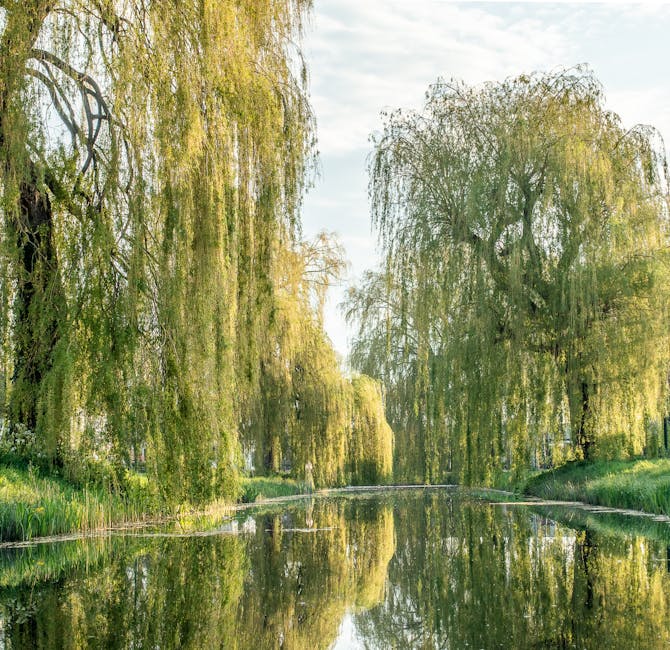
The willow (Salix species) connects to stories of grief, love, and compassion across nearly every culture that knew the tree. The Weeping Willow (Salix babylonica), with its cascading branches, is probably the most emotionally recognizable tree silhouette in the world.
A Japanese legend tells of a woman who met a man under a cherry tree and married him. Years later, when the emperor ordered the tree cut down for temple construction, the woman suddenly died, revealing that she had been the tree’s spirit all along. (Some versions of this story place a willow instead of a cherry, and the association between willows and spirits of women is strong across East Asian folklore.)
In Buddhism, the willow branch is the chief attribute of Kwan Yin (Guanyin), the bodhisattva of compassion, one of the most beloved figures in East Asian spiritual life. She is often depicted holding a willow branch dipped in the “water of life,” using it to sprinkle blessings on the faithful.
Jewish tradition includes willow as one of the Four Species (arba minim) used during the harvest holiday of Sukkot. The willow represents the lips, and therefore prayer. In northwest Europe, Christian churches use willow branches in place of palms on Palm Sunday, since palms don’t grow that far north.
Willow bark contains salicin, a natural pain reliever. Hippocrates prescribed chewing willow bark for fever around 400 BC. In 1897, Bayer synthesized acetylsalicylic acid (aspirin) from the same compound. The tree that symbolizes compassion in Buddhist tradition literally contains the chemistry of pain relief.
Weeping Willows grow fast (3-8 feet per year), reach 30-40 feet tall, and live about 30 years. They grow in zones 4-10 and need consistent moisture. Full sun, any soil type, but the roots will go wherever the water is. If you have a pond, creek, or wet area, a willow will thrive. If your yard is dry, skip it. Their roots aggressively seek water and will find your sewer line. A mature willow near a septic system will cost you $3,000-8,000 to fix. Plant them at least 50 feet from any underground pipes.
Plant a tree, plant a story
Every tree in your yard connects to something older and bigger than your property line. The oak connects to Zeus and Roman generals. The fig connects to Buddha and Romulus. The birch connects to Finnish mythology and German romance. The olive connects to Athena and the founding of Athens.
These aren’t just stories. The International Society of Arboriculture notes that mature trees add 10-15% to residential property values. But the stories are what make a tree personal. Nobody brags about their asset appreciation at a barbecue. They tell you about the oak their grandfather planted, or the olive tree that came from a cutting their cousin brought from Greece.
Pick a tree that fits your yard’s conditions and your climate zone. If you have a small yard, an almond, fig, or hazel will work without taking over. If you want great fall color, the maples and beeches from this list deliver. If you want to create a garden space that helps you unwind, an olive or willow by water will do it.
Forty years from now, when your grandkids sit under that tree, you’ll want a good story to tell them.