Best way to kill a tree (and when you should)

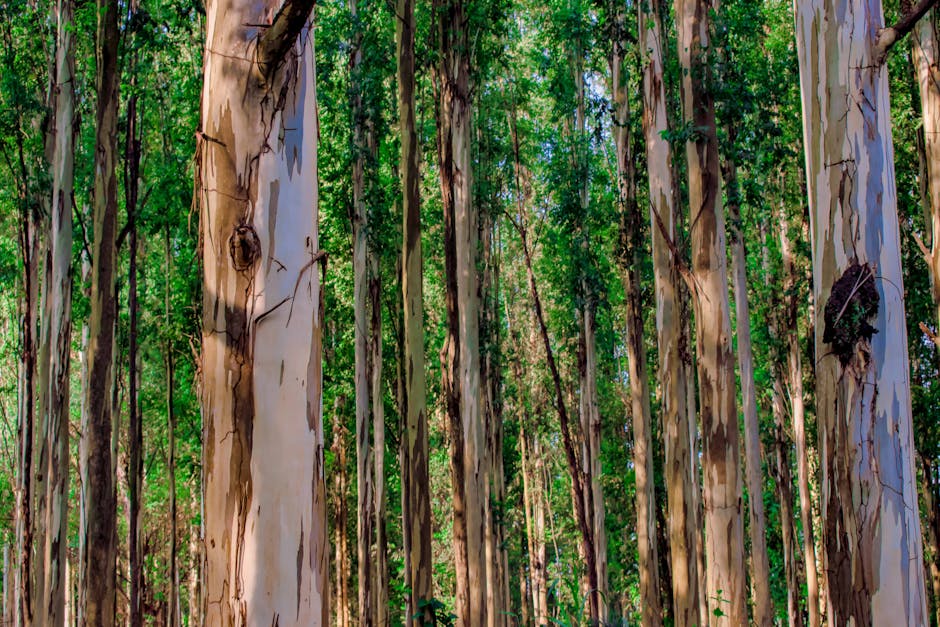
Sometimes the best way to kill a tree is with a saw and a bottle of herbicide. I’ve done it twice in twenty years, both times to invasive species that were destroying my property. No regrets.
This article is not about harming healthy trees on someone else’s land. That’s vandalism, it’s illegal, and in many California cities it carries fines up to $30,000 per tree under heritage tree ordinances. This is about the times when killing a tree is the responsible thing to do. An invasive Tree of Heaven sprouting through your fence. A root system cracking your foundation. A stump that won’t stop sending up shoots no matter how many times you cut them back.
If any of those sound familiar, keep reading.
When is it the right call to kill a tree?
Not every problem tree needs to die. But some do. Here are the situations where killing a tree is the correct move.
Invasive species. Tree of Heaven (Ailanthus altissima), Chinese Tallow (Triadica sebifera), Brazilian Pepper (Schinus terebinthifolia), and dozens of others are ecological disasters. They crowd out native plants, spread aggressively, and provide almost nothing for local wildlife. If you have one, removing it is an environmental favor. Our article on trees you should never plant covers more species that fall into this category.
Structural damage. A tree whose roots are cracking your foundation, buckling your driveway, or invading your sewer line is costing you real money. Foundation repairs run $5,000 to $15,000. Sewer line replacement costs $3,000 to $7,000. At some point the tree has to go.
Safety hazard. Dead limbs hanging over your roof, a trunk leaning toward your house, or a root plate lifting out of the ground after a wet winter. These are emergencies, not aesthetic problems.
Wrong tree, wrong place. Someone planted a 60-foot Eucalyptus eight feet from the house in 1985. You can’t fix that with pruning. Sometimes the only option is to start over with the right species in the right location.
Should you check local rules before killing a tree?
Yes. Do this first. Before you pick up a saw or mix herbicide, check three things.
Heritage tree ordinances. Many California cities protect trees above a certain trunk diameter. In San Jose, removing a heritage tree without a permit can cost you $30,000 in fines. Mountain View charges $169 per permit. Pacifica charges $256. Call your city’s planning department and ask.
HOA rules. Some homeowners associations require approval before removing any tree, even on your own property. Check your CC&Rs. Getting caught after the fact is more expensive than asking permission.
Neighbor notification. If the tree is near a property line, some jurisdictions require you to notify adjacent property owners. Even where it’s not required, a conversation with your neighbor before you start running a chainsaw saves everyone headaches.
Invasive species are often exempt from these protections. Many California cities specifically exclude Tree of Heaven, Eucalyptus, and other invasives from their heritage tree ordinances. But verify before you cut.
What is the best way to kill a tree with herbicide?
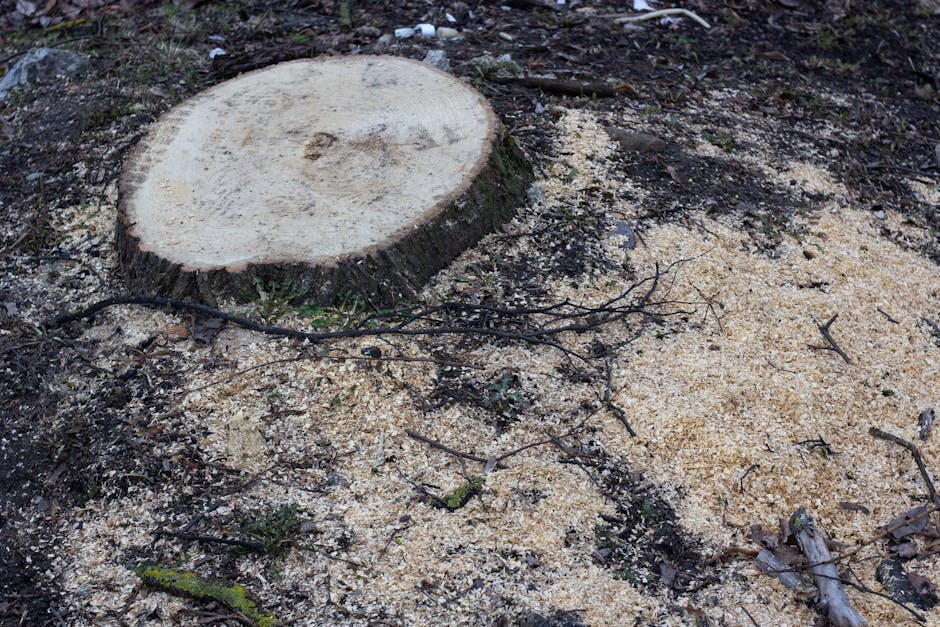
The cut stump method is the most reliable way to kill a tree and prevent regrowth. Here’s how it works.
Cut the tree as close to the ground as you can. Within 15 to 30 minutes of cutting (before the stump dries out), brush or spray a triclopyr-based herbicide directly onto the exposed cambium layer. That’s the ring of lighter wood just inside the bark. Concentrate the herbicide on the outer two inches of the stump face where the living tissue is.
Triclopyr (sold as Garlon, Pathfinder, or generic triclopyr 4EC) is the go-to for woody plants. A gallon of generic triclopyr 4EC runs about $60 and will treat dozens of stumps. For smaller jobs, Bayer Brush Killer Plus at the hardware store contains 8% triclopyr and costs about $20 for a quart.
Glyphosate (Roundup) also works on fresh-cut stumps. Use a concentrate with at least 41% glyphosate, not the pre-mixed spray bottle. Apply it the same way: paint or spray the outer cambium ring within minutes of cutting.
Timing matters. Treat stumps in late summer or early fall (July through October) when trees are actively moving sugars from the canopy down to the roots. The herbicide hitches a ride with those sugars and kills the root system. Winter applications are less effective because the tree is dormant and not transporting much.
Does girdling actually kill a tree?
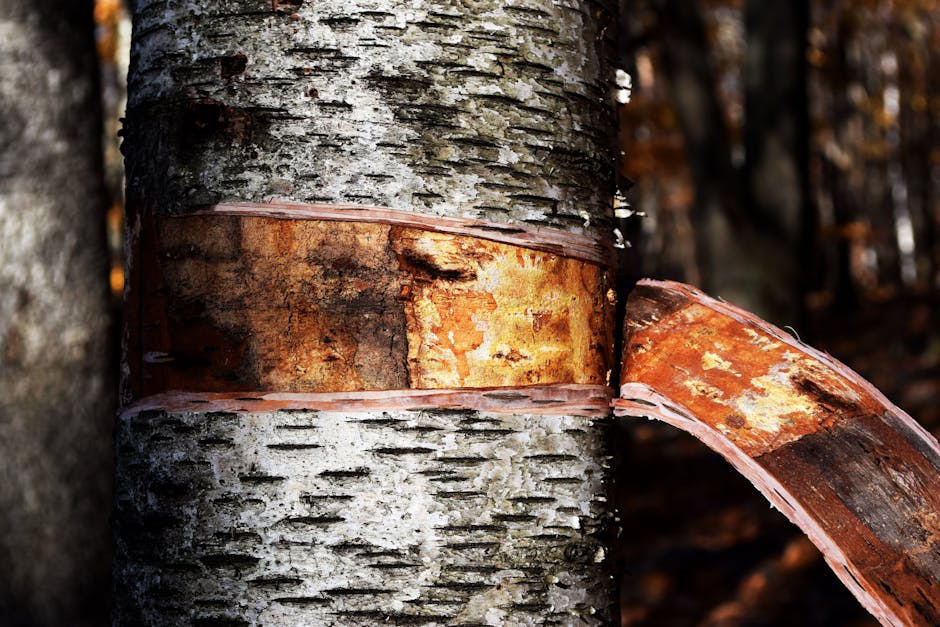
Girdling (also called ring-barking) works, but it’s slow. You remove a complete band of bark and the cambium layer underneath in a ring all the way around the trunk. This cuts off nutrient flow between the canopy and roots.
Use a hatchet or drawknife to strip a band of bark 6 to 8 inches wide, all the way around the trunk. Make sure you cut through the cambium (the green layer under the bark) down to the hard sapwood. If you leave even a thin bridge of cambium intact, the tree can heal over the wound and survive.
The tree dies over one to two growing seasons. Leaves thin out, branches die back, and eventually the whole canopy goes. The standing dead tree (called a snag) makes good wildlife habitat if it’s not near a structure.
Girdling is best for large trees in open areas where you don’t need immediate removal. It’s chemical-free, which matters if you’re near a waterway or garden. But it doesn’t work well on species that re-sprout aggressively from roots, like Tree of Heaven or Eucalyptus. Those trees will respond to girdling by sending up a forest of root suckers, which is worse than what you started with.
Spring is the best time to girdle. The cambium is soft and separates from the sapwood easily. The tree has just spent its stored root energy pushing new growth, so reserves are at their lowest.
What about hack-and-squirt for standing trees?
Hack-and-squirt (sometimes called frill-and-spray) is the best method for killing a standing tree without cutting it down first. It works well for invasive trees in areas where felling is difficult or dangerous.
Use a hatchet to make downward-angled cuts around the trunk at waist height. Space the cuts evenly, about one cut per inch of trunk diameter (minimum two cuts). Each cut should penetrate through the bark and into the sapwood, angled downward to create a little cup that holds liquid.
Immediately squirt concentrated herbicide into each cut. Use triclopyr (undiluted Garlon 3A or a 50% solution of triclopyr 4EC in water) or imazapyr. A squeeze bottle or spray bottle works fine. Fill each cup, don’t flood the ground around the tree.
The tree dies standing over several weeks to a few months. Leaves wilt, branches die, and the root system shuts down because the herbicide traveled through the sapwood to the roots.
Hack-and-squirt is most effective from June through November, except during heavy spring sap flow (which can push the herbicide back out of the cuts). Penn State Extension recommends one cut per inch of diameter with triclopyr or imazapyr for best results on hardwoods.
How do you kill specific invasive species?
Different species need different approaches. Here’s what actually works on the worst offenders.
Tree of Heaven (Ailanthus altissima). This is the invasive that keeps arborists up at night. Cut it down and it responds by sending up dozens of root suckers across your yard and your neighbor’s yard. Don’t just cut it. Use hack-and-squirt with triclopyr in mid to late summer (July through September) when the tree is moving carbohydrates to its roots. If the tree is already cut, treat the stump with triclopyr immediately and monitor for root suckers for the next two to three years. Treat every sucker with foliar triclopyr spray as soon as it appears. This tree fights back.
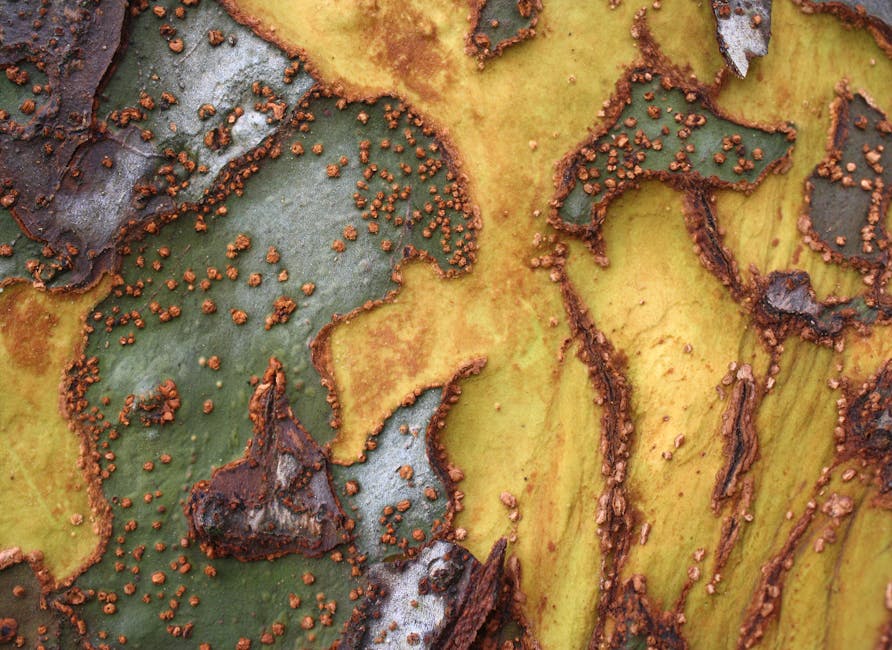
Chinese Elm (Ulmus parvifolia). A persistent re-sprouter. Cut stump treatment with triclopyr works, but you’ll need to retreat stump sprouts if you miss the initial application window. Apply herbicide within 15 minutes of cutting. Chinese Elm is especially aggressive about resprouting in the first spring after cutting.
Eucalyptus (Eucalyptus globulus and other species). Eucalyptus is one of the most aggressive re-sprouters on the planet. The ISA Arboriculture & Urban Forestry journal documented that blue gum eucalyptus sprouts from adventitious buds along the entire trunk, from below ground level to the canopy. Cut stump with concentrated triclopyr applied immediately is the standard approach. You’ll likely need to retreat sprouts at least once. Plan for a full year of follow-up treatments.
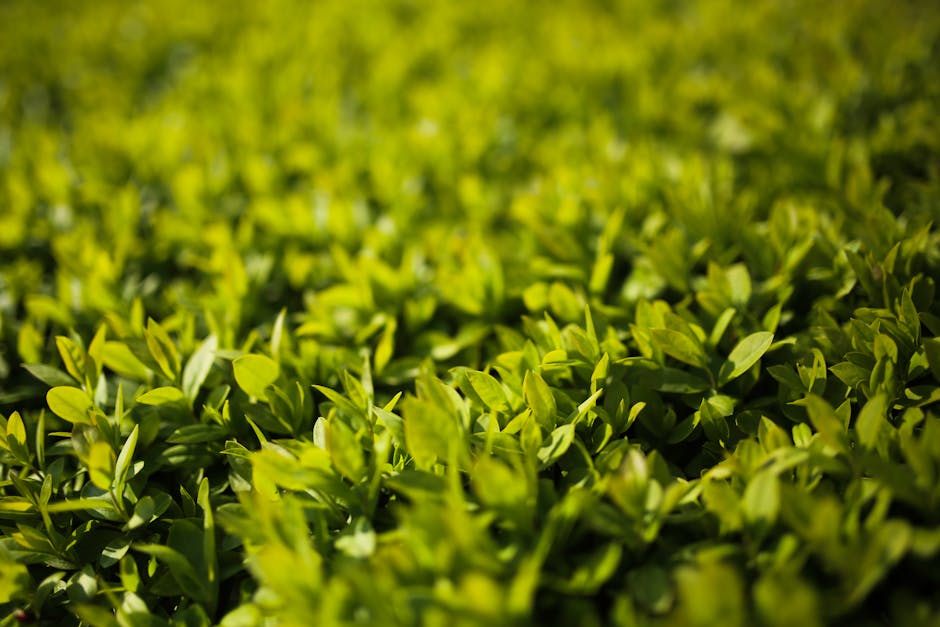
Privet (Ligustrum species). Privet is straightforward compared to the others. Cut it to the ground and paint the stump with 41% glyphosate concentrate within minutes. Privet doesn’t re-sprout as aggressively as Tree of Heaven or Eucalyptus, but untreated stumps will send up new growth within a month.
What methods should you avoid?
The internet is full of terrible advice about killing trees. Here’s what doesn’t work and what’s actually harmful.
Copper nails. The most persistent tree-killing myth online. A few copper nails will not kill a healthy mature tree. The amount of copper is far too small. You’ll damage the tree just enough to create entry points for disease, and that’s about it.
Salt (sodium chloride or Epsom salt). Salt will kill a tree. It will also kill every other plant within root reach and sterilize the soil for years. Your grass, your flower beds, and your neighbor’s garden will all suffer. Don’t do it.
Diesel fuel, motor oil, or bleach. Illegal to pour on the ground in every state. They contaminate soil and groundwater, and they don’t work reliably as tree killers anyway.
Paving over roots. Covering roots with concrete or asphalt doesn’t kill a tree. The roots keep growing under and through the pavement, and now you’ve got an even more expensive removal problem.
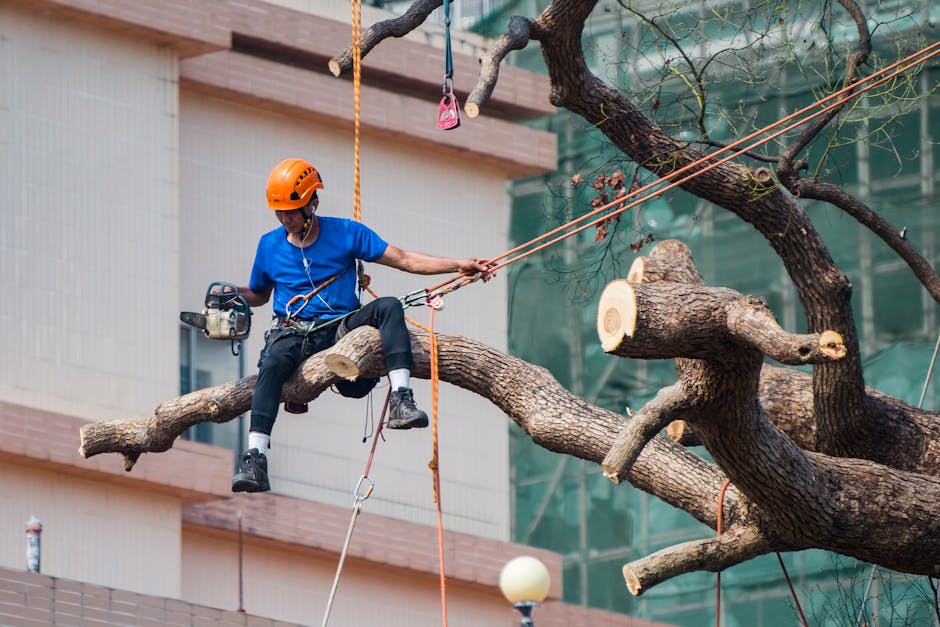
When should you hire a professional arborist?
Some tree kills are DIY-friendly. A 4-inch diameter invasive privet in your backyard? You can handle that with a handsaw and a bottle of herbicide in an hour. Total cost: about $25 for the herbicide.
Other situations demand a professional. Here’s when to call an ISA-certified arborist.
Any tree over 10 inches in diameter. Felling trees is dangerous work. A 30-foot tree going in the wrong direction can destroy a fence, a car, or a person. Our tree removal guide covers what to expect from the process and what it should cost.
Trees near structures or power lines. If the tree is within falling distance of your house, garage, or overhead utility lines, hire a pro. Period. Expect to pay $1,500 to $4,000 for a large tree removal, plus $200 to $500 for stump grinding.
Heritage or protected trees. If the tree requires a permit to remove, an arborist can prepare the required documentation and sometimes submit the permit application on your behalf.
Uncertain identification. If you’re not 100% sure the tree is invasive, don’t kill it. Have an arborist identify it first. Killing a native oak that you thought was an invasive weed tree is an expensive, irreversible mistake.
For help finding the right person, this guide on choosing the right arborist covers the credentials to look for and the questions to ask.
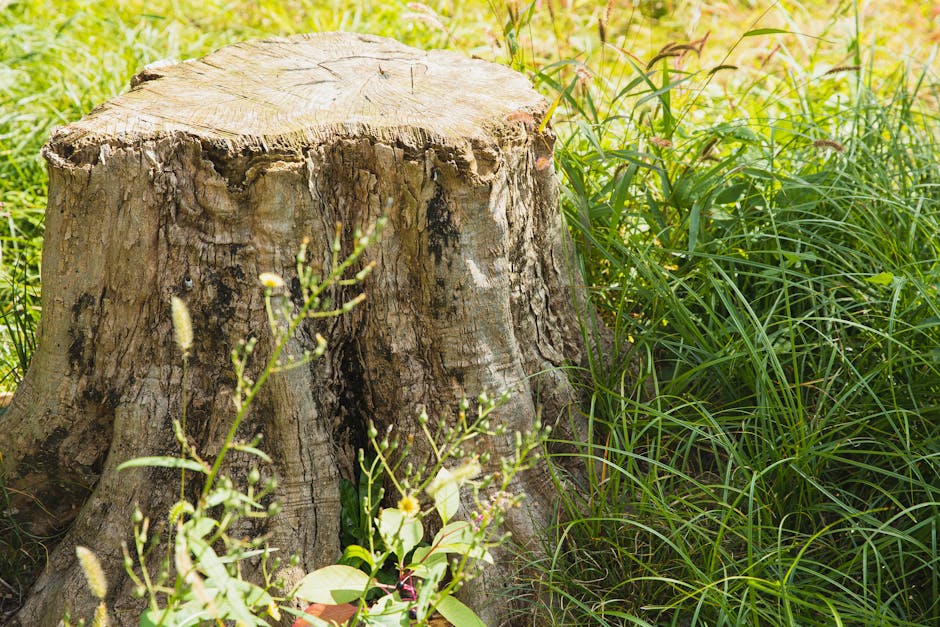
What do you do with the stump after the tree dies?
Once the tree is dead and the stump is treated, you have options. Grinding is the most common. A stump grinder rental runs $200 to $400 per day, or hire someone for $200 to $500 per stump. Grinding takes the stump down 6 to 12 inches below grade, and you can fill the hole with soil and plant over it.
If the stump is in a spot where you don’t need it gone immediately, you can turn it into a garden feature. Plant succulents in a hollowed-out stump, set a birdbath on top, or let it decompose naturally. For invasive species stumps, grinding is the safer choice. You don’t want any chance of regrowth.
The bottom line
Killing a tree is a last resort. But when you’ve got an invasive species spreading across your property, roots cracking your foundation, or a hazard tree over your house, it’s the right call. Check your local ordinances. Use the right method for the species. Treat stumps within minutes of cutting. And if the tree is bigger than you’re comfortable handling, spend the $2,000 on a pro. It’s cheap compared to a dropped tree on your roof.