Best trees for fall color in your yard

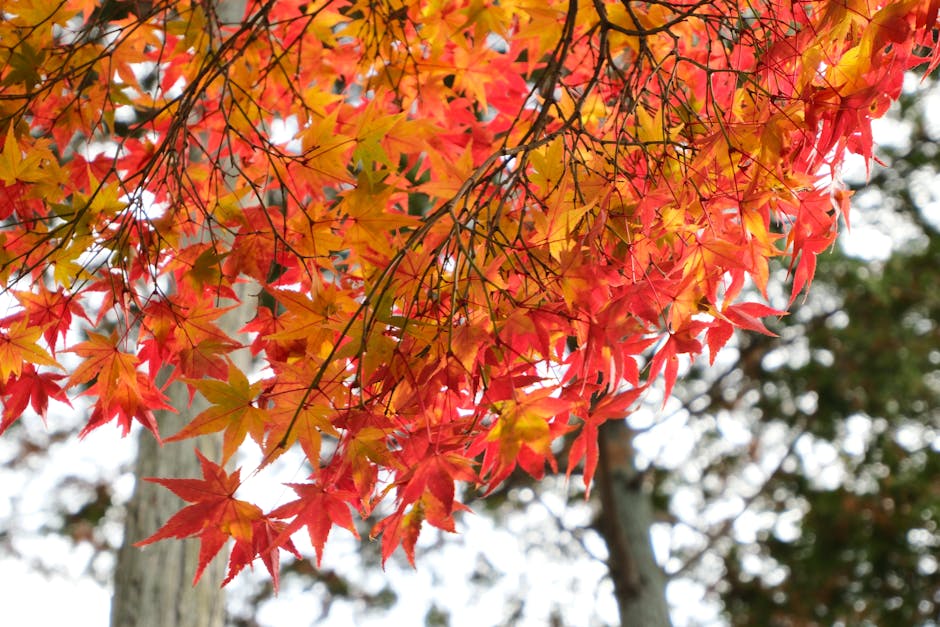
Fall color comes from simple chemistry. Chlorophyll breaks down as daylight shortens, and the pigments that were hiding underneath all summer show up: carotenoids (yellows, oranges) and anthocyanins (reds, purples). Some trees produce those pigments in droves. Others just turn brown and drop. These twelve species consistently deliver the best fall color in a home yard, not just a Vermont postcard or an arboretum with a full-time staff.
I’ve grown or lived next to most of these over twenty-plus years in Northern California. Here’s what actually works.
Red Maple (Acer rubrum)
Red Maple is the most reliable fall color tree you can buy. Period. The cultivar you pick matters. ‘October Glory’ peaks late (early November in zones 7-9) with deep scarlet. ‘Red Sunset’ turns earlier and holds a consistent orange-red for three weeks. ‘Autumn Blaze’ is technically a Freeman Maple hybrid (Red x Silver) and grows faster than either parent, but the fall color runs more orange than true red.
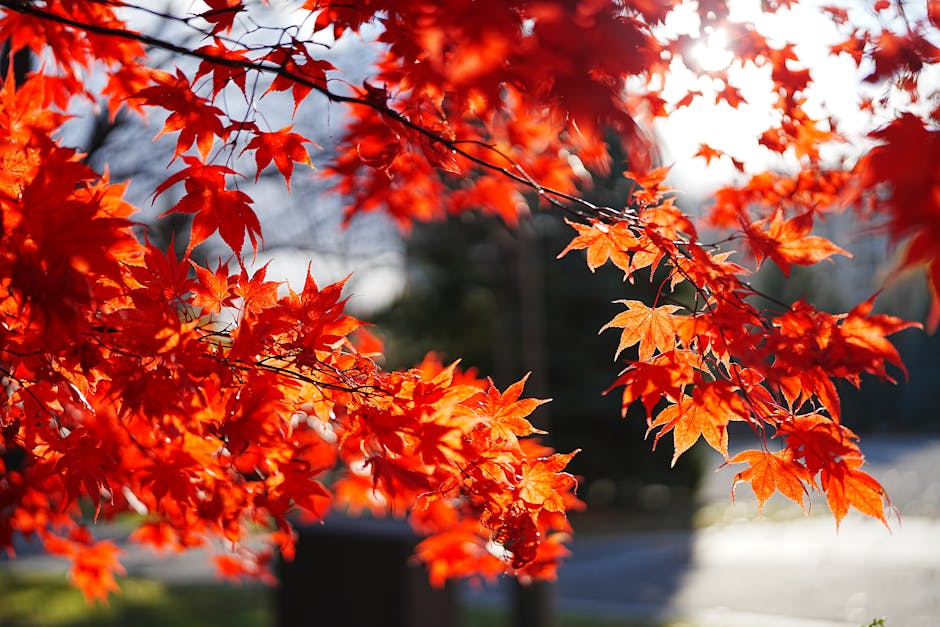
Red Maples grow 40 to 60 feet tall with a rounded crown. They handle zones 3-9, wet or dry soil, and urban pollution that kills fussier species. WUCOLS rates Red Maple as moderate-water in the Central Valley, so plan on regular summer irrigation here in NorCal. Growth rate is moderate to fast, around 12 to 18 inches per year once established. Expect fall color from mid-October through early November depending on your zone.
One honest warning: Red Maples grow aggressive surface roots. Don’t plant one within 10 feet of a sidewalk or patio, and forget about growing grass under the canopy. Give it a 4-inch mulch ring out to the drip line instead. A 6- to 8-foot Red Maple from a nursery runs $150-$350 depending on cultivar and root ball size. For a complete breakdown of the maple family, including which species to avoid, see our guide to maple tree varieties or check out detailed maple species profiles for an even deeper dive.
Sugar Maple (Acer saccharum)
If you’ve seen a New England hillside on fire with fall color, you were looking at Sugar Maples. No other tree in North America produces the same range of color on a single specimen. One Sugar Maple can show yellow, orange, burnt amber, and deep red all at the same time, on the same branch.
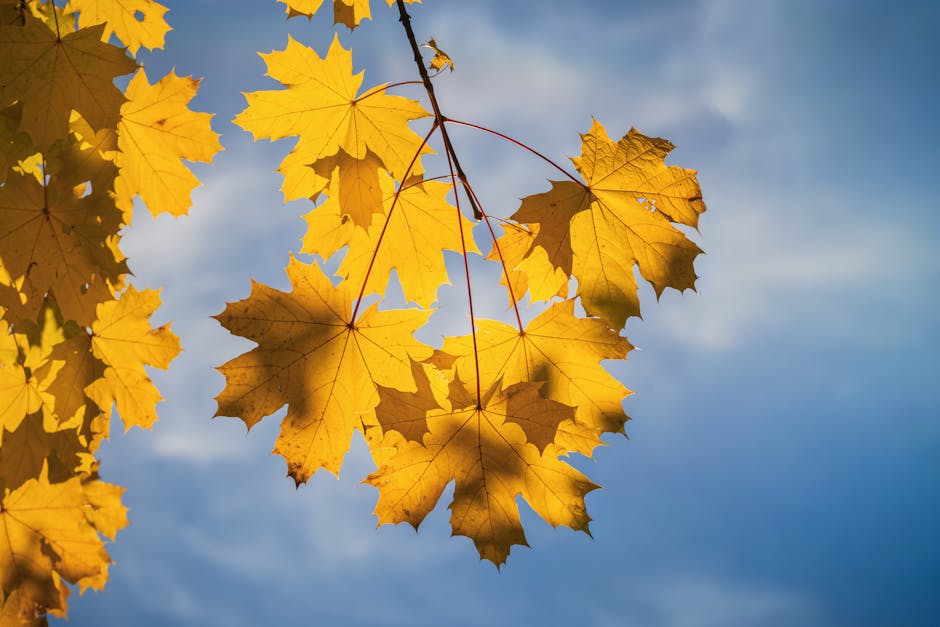
The best cultivars for home landscapes are ‘Legacy’ (heat tolerant, strong branch structure, zones 4-8) and ‘Green Mountain’ (faster growth, better drought resistance than the species). ‘Commemoration’ is another solid pick if you can find it. These grow 50 to 75 feet tall with a dense, oval crown that throws serious shade.
Sugar Maples are pickier than Red Maples. They don’t tolerate road salt, compacted soil, or reflected heat from pavement. In zones 8-9, they need afternoon shade or they’ll scorch by August. They grow best in zones 4-7 with well-drained, slightly acidic soil. If you’re in a Sacramento suburb with alkaline clay, skip the Sugar Maple and go with Red Maple instead. A nursery specimen runs $200-$400 for a 6- to 8-foot tree.
Sweetgum (Liquidambar styraciflua)
Sweetgum delivers maybe the most varied fall color palette of any single tree. The star-shaped leaves turn yellow, orange, scarlet, and deep purple, sometimes hitting all five colors on one branch. It’s like someone spilled an entire paint box on the canopy.

Two cultivars worth seeking out: ‘Worplesdon’ has a narrower pyramidal form and more reliable purples. ‘Rotundiloba’ is the one you actually want, because it’s fruitless. That matters, and here’s why.
Standard Sweetgums drop hundreds of spiny seed balls (gumballs) from November through February. They hurt barefoot. They twist your ankle on a slope. They jam your mower. They clog your gutters. I wrote a whole article about why you should never plant a standard Sweetgum because the cleanup cost me more time than any other tree in my yard. WUCOLS rates Sweetgum as moderate-water in the Central Valley, so it’s not even particularly drought-friendly for all the trouble it causes. ‘Rotundiloba’ (zones 5-9) solves the seed ball problem at least. It grows 60 to 75 feet tall, gives you the same fall color show, and produces zero gumballs. Expect to pay $250-$450 for a 6- to 8-foot specimen, and it’s worth every penny.
Ginkgo (Ginkgo biloba)
Ginkgo is the most dramatic single-day spectacle in the tree world. The fan-shaped leaves turn a uniform, clean golden yellow. No orange. No red. Just pure gold. And then they all drop within 24 to 48 hours. You go to work with a golden canopy and come home to a golden carpet under bare branches. It’s the fastest leaf drop of any tree I’ve grown.
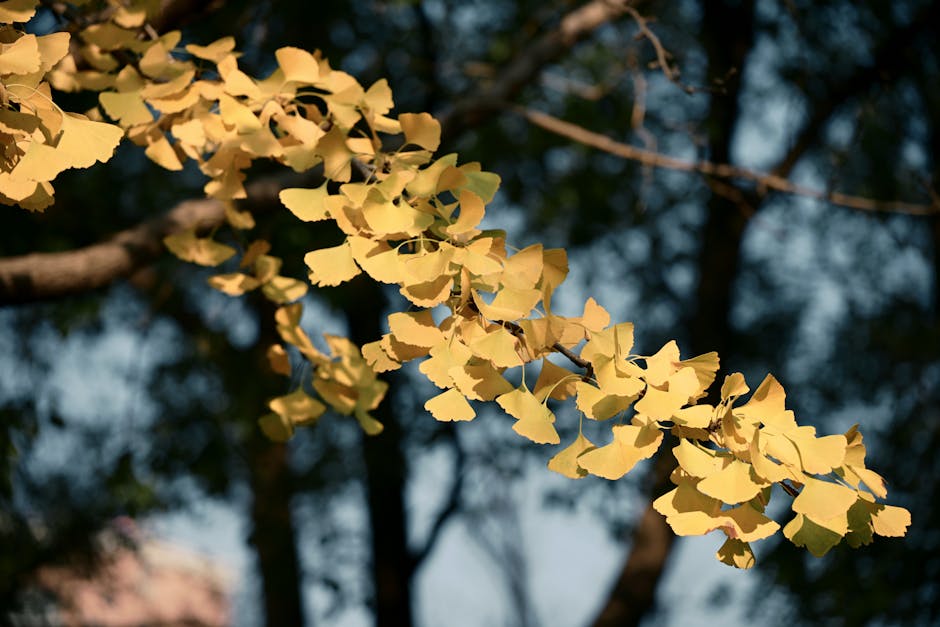
Ginkgo grows slowly (6 to 12 inches per year) to 50 to 80 feet tall. It’s a survivor. This species predates the dinosaurs by 100 million years and it acts like it. Pollution, salt, compacted soil, drought once established. Nothing bothers a Ginkgo. WUCOLS rates it as moderate-water in the Central Valley, so it does want some irrigation through our dry summers, but it won’t keel over if you miss a week. Zones 3-8, full sun.
One non-negotiable rule: plant only male trees. Female Ginkgos produce fruit that contains butyric acid. It smells exactly like vomit when it drops and rots on your sidewalk. Your neighbors will hate you. ‘Autumn Gold’ (broad, symmetrical crown) and ‘Princeton Sentry’ (narrow, columnar form great for tight spaces) are guaranteed male cultivars. A 6- to 8-foot Ginkgo runs $200-$350. Budget an extra $0 per year on pest control because nothing eats this tree.
Black Tupelo (Nyssa sylvatica)
Also called Black Gum, this native tree produces the earliest reliable fall color of any species on this list. In zones 7-9, the glossy leaves start turning by mid-September, weeks before the maples even think about it. The color is a deep, fluorescent scarlet that literally glows when backlit by low afternoon sun.
Black Tupelo grows 30 to 50 feet tall with a pyramidal shape when young that matures into an irregular, character-filled crown. Zones 4-9. It prefers moist, acidic soil (pH 5.5 to 6.5) but tolerates average conditions once established. The key: plant it young. Black Tupelo has a taproot system and hates being transplanted at larger sizes. Buy a 5-gallon container or bare-root tree and get it in the ground between November and February.
The fall color is remarkably consistent. While maples have good years and bad years depending on weather, Black Tupelo delivers that deep scarlet every single fall. ‘Wildfire’ is a cultivar with reddish new growth in spring that turns dark green by summer, then scarlet in fall. Expect to pay $100-$250 for a nursery specimen. This tree is underplanted and underpriced.
Japanese Maple (Acer palmatum)
Japanese Maples are the best fall color trees for a small yard. Most varieties stay under 25 feet. Many stay under 15 feet. The laceleaf (dissectum) types barely reach 8 feet. That means you can plant one 6 feet from your front door and never worry about it.

Here are four cultivars worth buying: ‘Bloodgood’ (deep crimson, 15 to 20 feet, the standard choice). ‘Sango-kaku’ (Coral Bark Maple, golden yellow fall color plus coral-red bark all winter, 20 to 25 feet). ‘Crimson Queen’ (laceleaf, cascading form, deep red, 8 to 10 feet). ‘Osakazuki’ (the single best fall color of any Japanese Maple, a screaming red-orange that’s hard to believe is real, 15 to 20 feet).
Japanese Maples need protection from hot afternoon sun, especially in zones 8-9. Morning sun with afternoon shade is ideal. They also don’t like wind. A spot sheltered by your house, a fence, or larger trees is perfect. Zones 5-8 (zone 9 with afternoon shade). Water deeply once a week during summer. They don’t need much fertilizer. In fact, too much nitrogen pushes leggy growth and weakens fall color.
A 5-gallon Japanese Maple runs $50-$150. A specimen-size ‘Bloodgood’ in a 25-gallon container can hit $300-$600. For more on fitting trees into tight lots, see our best trees for small yards.
Parrotia (Persian Ironwood)
Parrotia persica is the best tree nobody plants. Ask ten homeowners about fall color and you’ll get maple, maple, ginkgo, maple. Nobody says Parrotia. They should.
This small to medium tree reaches 25 to 40 feet with a spreading, vase-like shape. The fall color starts green, transitions through yellow, moves to orange, then deepens to crimson. By late October, you’ll see all those colors on the tree at once. By November, the remaining leaves glow a neon gold that photographs badly because cameras can’t capture the intensity.
Parrotia is drought-tolerant once established, pest-free, disease-free, and adaptable to most soil types (including alkaline). Zones 5-8. The bark exfoliates in patches year-round, showing gray, green, and cream underneath, like a smaller version of a London Plane. Growth rate is moderate, around 12 inches per year. A nursery specimen costs $150-$300.
No serious downsides. No messy fruit. No aggressive roots. No pest issues. The UC Davis Arboretum selected Parrotia as an Arboretum All-Star, their seal of approval for plants that thrive in Sacramento Valley conditions with minimal fuss. WUCOLS rates it low to moderate water. In 20 years of watching trees, Parrotia is the one I tell every neighbor to plant. It performs in every season and asks for almost nothing in return. If you want a tree that adds year-round interest, including property value that pays for itself, Parrotia is the answer.
Katsura Tree (Cercidiphyllum japonicum)
Katsura is the only tree on this list you can smell before you see it. When the heart-shaped leaves turn yellow and apricot in October, they release a scent that smells like cotton candy or burnt caramel. Walk past a Katsura on a warm fall afternoon and you’ll stop and look around for whoever is baking something.
The tree grows 40 to 60 feet tall with a graceful, pyramidal shape. Zones 4-8. The canopy stays open enough to grow shade-tolerant groundcovers underneath. Fall color peaks in mid-October in most climates, running yellow to soft apricot.
Here’s the catch: Katsura needs consistent moisture. WUCOLS rates it moderate to high water in the Central Valley. That’s one of the thirstiest ratings on this list. Especially when young, drought stress causes leaf scorch starting in July, and scorched leaves turn brown in fall instead of gold. If you live where summer means six straight months without rain (like most of Northern California), plan on deep watering once a week from June through September for the first five years. After that, the root system can handle moderate drought. But if you skip those first summers, you’ll lose the tree or at minimum lose the fall color that makes it worth planting.
Expect to pay $150-$300 for a 5- to 7-foot nursery tree. Plant it in fall (October or November) to give the roots a full cool season to establish before summer heat hits.
Witch Hazel (Hamamelis virginiana)
American Witch Hazel is a native understory tree that does something no other tree on this list can do: it flowers and shows fall color at the same time. In October and November, you get bright, clean yellow leaves and spidery, fragrant yellow flowers on the same branch. Hummingbirds and late-season pollinators love it.
Witch Hazel grows 15 to 20 feet tall, sometimes wider than tall. Zones 3-8. It prefers partial shade but handles full sun if the soil stays moist. It’s naturally a multi-stem tree with a spreading, irregular form that works as a specimen, a screen, or a woodland edge planting.
Two other species worth knowing: Hamamelis vernalis (Ozark Witch Hazel, zones 4-8) blooms in late winter with red-orange flowers. The hybrid Hamamelis x intermedia cultivars bloom January through March in warmer zones and come in copper, orange, and red flower colors. But for fall color specifically, the native H. virginiana is the one to plant. It’s also the most shade-tolerant of the group.
Budget $60-$150 for a nursery specimen. This tree is easy to find at native plant nurseries and UC Master Gardener sales.
Sassafras (Sassafras albidum)
Sassafras is the native tree that nobody plants on purpose, and it’s a shame. The fall color is a kaleidoscope: yellow, orange, scarlet, and purple, sometimes all on the same tree. The mitten-shaped leaves (some with three lobes, some with two, some with none) give it a personality that no other tree matches.
Sassafras grows 30 to 60 feet tall with an irregular, character-filled crown. Zones 4-9. It’s one of those trees that looks like it’s been around for a hundred years even when it’s twenty. Male trees produce small yellow flowers in spring that attract early pollinators. Female trees produce dark blue berries on bright red stems that birds devour in September.
One thing to know: Sassafras colonizes by root suckers. One tree becomes a grove over time. In a naturalized area, at the edge of a property, or on a large lot, that’s a feature. In a 5,000-square-foot suburban yard, you’ll be pulling suckers every spring. The solution is a root barrier at planting time, or just mow them when they pop up in the lawn.
Sassafras has a taproot, so plant it young. A 3- to 5-gallon container tree ($40-$100) transplants much better than a balled-and-burlapped specimen. Get it in the ground in fall or early spring.
Bald Cypress (Taxodium distichum)
Bald Cypress shows up on our best trees for sidewalk planting and on our shade tree picks for good reason. It also earns a spot here for its unusual coppery red-bronze fall color. As a deciduous conifer, it drops soft needles instead of broadleaves. That russet-copper color stands out because everything else around it is red or yellow. It’s different.
Bald Cypress grows 50 to 70 feet tall with a straight trunk and a pyramidal crown. Zones 4-9. WUCOLS rates it moderate-water in the Central Valley. Despite its swamp origins, it handles dry upland soil surprisingly well once the roots establish. It also tolerates flooding, salt spray, and urban pollution. Few trees can claim that range of tolerance.
The “knees” (woody projections from the roots) only form in consistently wet soil. If you plant one in a regular yard, you won’t get knees. The fall color peaks in November, holding later than most deciduous trees. A 6- to 8-foot nursery tree runs $150-$350. Growth rate is moderate, about 12 to 24 inches per year.
Sourwood (Oxydendrum arboreum)
Sourwood is a native that maxes out around 25 to 30 feet, making it one of the best fall color trees for smaller properties. The fall color is a deep, glossy crimson that starts early, often late August in zones 7-8, and holds for weeks. Before the fall show, it produces drooping clusters of white, fragrant flowers in June and July that bees go wild for. Sourwood honey is a real product sold throughout the Appalachian region, and beekeepers consider it some of the best honey in the world.
Sourwood needs acidic, well-drained soil (pH 5.0 to 6.0). Zones 5-9. WUCOLS rates it moderate-water, and it’s drought-sensitive in zones 8-9. If you’re in the Sacramento Valley with alkaline clay soil, Sourwood will struggle. You’d need to amend with sulfur and organic matter to get the pH down. It doesn’t like being transplanted at larger sizes, so buy it small (3- to 5-gallon container, $50-$120) and plant it in the right spot the first time. Full sun to partial shade. Plan on supplemental watering during dry spells.
Sourwood grows slowly, around 6 to 12 inches per year, which means it won’t crowd out anything nearby. It’s a good companion tree next to a larger shade tree, catching the sun at the canopy edge.
How to get the best fall color from any tree
Fall color intensity depends on weather, and you can’t control weather. But you can control tree health, and healthy trees produce better color than stressed ones.
What triggers the best color: Warm, sunny days (70s) followed by cool nights (40s) during October. The warm days produce sugars in the leaves. The cool nights trap those sugars, which the tree converts into anthocyanin pigments (the reds and purples). Cloudy, warm falls produce washed-out color. Early hard freezes kill the leaves before the pigments peak.
What you can control: Water your trees deeply through September, even if you stop watering the lawn. Drought-stressed trees drop their leaves early or skip the color show entirely. Keep a 3- to 4-inch mulch ring (but not touching the trunk) to retain soil moisture and moderate root temperature. Don’t fertilize after July, because late nitrogen pushes soft new growth that’s vulnerable to early frost.
Soil pH matters more than people realize. Acidic soils (pH below 6.5) produce more intense reds. Alkaline soils push colors toward yellow. You can’t change your soil pH overnight, but you can mulch with pine bark or oak leaf compost over time to nudge it downward.
Keep your trees healthy year-round with our spring care checklist, and they’ll reward you every October. If you’re picking trees that also protect your house from frost, several of these work double duty as windbreaks too. For more fall color tree picks and regional recommendations, we cover additional species for the Pacific Northwest and Southeast.